You took the tablets, you finished the course, and it still stings. Or it eased for a few days and then came back. That is wearing, and it is worth acting on rather than waiting to see.
In short: if you are no better 48 hours after starting treatment, or the symptoms return after the course, contact your GP or pharmacist again. Ask for urgent help if you are 65 or older, have a high temperature or shivers, pain in your back or side just under the ribs, or blood in your urine.
What to do first if it still hurts
Start with a call to your GP or pharmacist. Tell them you have had antibiotics and are not better. They can decide whether you need a urine test, a different antibiotic, or a closer look at what is going on.
These need urgent help the same day. In the UK that means an urgent GP appointment or NHS 111; elsewhere, use your local out-of-hours service:
- a high temperature, or feeling hot, cold and shivery
- pain in your lower tummy, or in your back just under the ribs
- blood in your urine, which can look bright pink, red or dark brown
- you are 65 or older, pregnant, or have diabetes
- symptoms that get worse quickly
If you feel confused, drowsy or have trouble speaking, call 999 in the UK or 112 elsewhere in Europe straight away, and do not drive yourself.
Two things not to do. Do not stop your antibiotics early because you feel a little better; the NHS advises taking the whole course you were given. And do not change or add to your medicines on your own. Ask your pharmacist first.
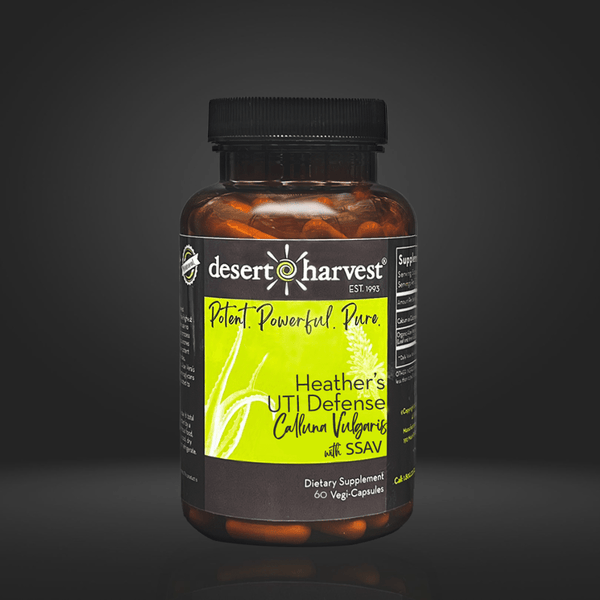
 Related productHeather's UTI Defense — Calluna Vulgaris with SSAV4.79· 33 reviews€39,95
View product
Why it can still hurt after a course
There is no single reason, which is why a second look matters. These are the explanations doctors commonly consider.

- The infection may need something different. Your GP may ask for a urine test and may prescribe a different antibiotic.
- It may be a long-term infection. The NHS notes that sometimes symptoms do not go away, short courses may not work, and urine tests may not show an infection. These are hard to diagnose. If you were treated and still have symptoms, ask your GP about a referral to a specialist.
- It may not be an infection at all. Repeated courses that do not help, with urine samples that keep coming back clear, are a pattern many people with interstitial cystitis (bladder pain syndrome) went through before their diagnosis. It is only one possibility, and only a doctor can tell. Our guide to interstitial cystitis versus a UTI explains how the two differ.
- After the menopause. Falling oestrogen changes the tissues of the urinary tract, and the NHS lists having been through the menopause among the things that make infections more likely. If infections keep returning, a GP can talk through other options with you. Our gentle guide to bladder wellbeing after the menopause covers this stage of life.
Whatever the reason, the advice is the same: if you are no better within 48 hours of starting treatment, ask again rather than wait.
What to tell your GP or pharmacist
A clear story helps them decide quickly. Jot these down before you ring, or take the note with you.
- when it started, and when you began the antibiotics
- what you took, how often, and whether you missed any doses
- what changed: better, worse, or better and then back again
- any blood in your urine, fever or shivers, or pain in your back or side
- how many infections you have had in the last 6 or 12 months
That last point matters. The NHS says that if you have two infections within six months, or three within twelve months, you need to see a GP. These are UK figures, but they are a sensible guide wherever you live.
It also helps to say plainly how it feels. Burning when you pee, a constant ache, urgency, or pressure that eases for a while after you empty your bladder: each tells the doctor something different, so describe it in your own words.
Comfort while you wait for advice
These steps are for comfort. They do not clear an infection, and they never replace a call to your GP.

- Drink enough fluid to pass pale urine regularly through the day, as the NHS suggests.
- Leave out fruit juice, coffee and alcohol for now, because they can irritate the bladder.
- Rest where you can. Some people find a covered hot-water bottle comforting.
- Ask your pharmacist about pain relief. They can tell you what is suitable with your other medicines.
For gentle food and drink while your bladder settles, see what to eat and drink with cystitis.
Between episodes
Once you are well again, a few everyday habits are widely recommended: drink plenty of water, do not hold on when you need the toilet, take your time to empty your bladder fully, wipe from front to back, wear cotton underwear and avoid scented soap near the genital area. For the longer picture, read why infections keep coming back and how to support your urinary tract.
Some people also add a food supplement to their routine once they are well. Heather's UTI Defense is a food supplement: heather (Calluna vulgaris) with purified Super-Strength Aloe Vera, one capsule a day, with no cranberry and no D-mannose. Some people take it for everyday urinary comfort. It does not treat an infection and is not a substitute for antibiotics or for a doctor. EU rules do not allow supplements to claim to prevent UTIs.
Good to know