In short: Aloe Vera gel can absolutely be part of a daily face routine for most people. Use it on clean, slightly damp skin as a light hydrating layer, morning and evening, after cleansing and before your moisturiser and sunscreen. Keep the layer thin, patch test before you start, and let comfort be your guide. Here is a gentle, fragrance-free routine that puts Aloe Vera to work without overcomplicating things.
One of the most searched questions about Aloe Vera is simply whether you can use it on your face every day. The short answer is yes for most people, and the longer answer is about how. Aloe Vera gel is light and water-based, which makes it easy to slot into a routine, but a few small habits make the difference between skin that feels comfortable and skin that feels overloaded.
A simple morning routine

Mornings are about hydration and protection, kept brief.
- Cleanse gently. Use a mild, fragrance-free cleanser and lukewarm water. Pat the skin so it is clean and slightly damp, not bone dry.
- Apply a thin layer of Aloe Vera. Smooth a small amount over the face and let it absorb for a minute. It should feel cool and refreshing, never tacky.
- Moisturise. Follow with your usual moisturiser to seal in the hydration. Aloe Vera and a moisturiser work as a team: water first, then something to hold it in.
- Finish with sunscreen. Daytime always ends with broad-spectrum SPF, applied as the final step.
Aloe Vera sits comfortably under most moisturisers and sunscreens because it is so light. If you want to understand why a water-rich gel suits reactive skin in the first place, our guide to Aloe Vera for sensitive skin covers the basics calmly.
A calming evening routine
Evenings are for removing the day and letting skin settle.
- Cleanse to remove sunscreen, makeup and the day's grime.
- Apply Aloe Vera to damp skin. In the evening it can feel especially soothing on areas that have felt warm or tight during the day.
- Layer your night moisturiser or facial oil if your skin likes one.
If you use targeted actives such as a retinoid or an exfoliating acid, Aloe Vera can be a comfortable buffer step. Many people apply a thin layer of Aloe Vera to calm the feeling of tightness that strong actives can bring. As always, introduce one new thing at a time so you can tell what your skin is responding to.
Choosing the right gel

Not all Aloe Vera gels are equal. For the face, you want a high Aloe Vera content, no added fragrance, and a short, transparent ingredient list, so the gel does the soothing and hydrating without introducing triggers. A coloured or strongly perfumed gel is usually a sign that there is more going on than Aloe Vera.
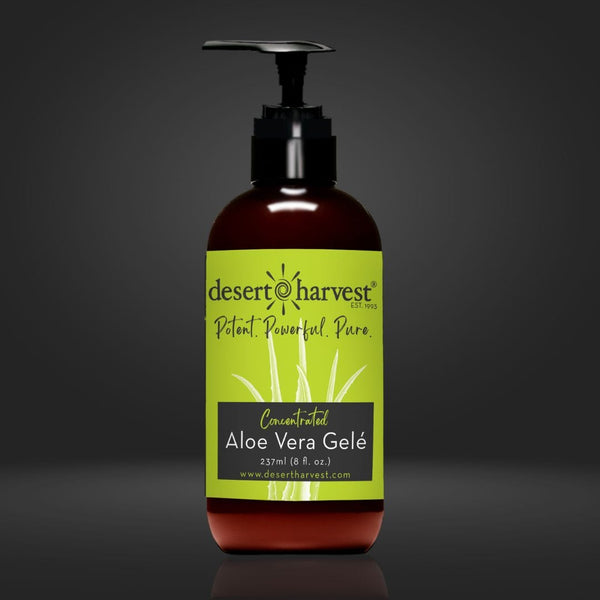
Our Aloe Vera Gelé by Desert Harvest is formulated to be exactly this kind of everyday face-friendly soother: Aloe Vera-first, fragrance-free and light enough to wear under everything else. If you would like to become more confident at reading what is actually in a gel, our piece on how to read an Aloe Vera label is a useful next step. You can also see how Aloe Vera fits the wider picture on our sensitive skin and Aloe Vera hub.
How much, how often
The most common mistake is using too much. A thin film is enough; a thick layer simply takes longer to absorb and can feel sticky. Once or twice a day suits most skin. If your face feels particularly dry or flushed, a light midday refresh is fine, but you do not need to keep reapplying for the sake of it. Aloe Vera rewards a little-and-often approach rather than a heavy-handed one.
What to watch for
Healthy facial skin should feel comfortable, hydrated and calm. If Aloe Vera ever leaves your skin feeling stingy, itchy or tight in a way that does not settle, stop and let it rest. This is uncommon, but it is exactly why a 24-hour patch test on the inner forearm is worth doing before the first facial use. If irritation persists, or if you have a diagnosed skin concern, a pharmacist or doctor is the right person to ask.
The takeaway
A daily Aloe Vera routine does not need to be complicated. Cleanse gently, apply a thin layer of fragrance-free Aloe Vera to damp skin, then moisturise and, in the daytime, finish with sunscreen. Keep it simple, keep it consistent, and let your skin set the pace. Done this way, Aloe Vera becomes a quiet, dependable part of looking after a sensitive face.

Good to know
Frequently asked questions
Can I use Aloe Vera gel on my face every day?
When should I apply Aloe Vera in my skincare routine?
How much Aloe Vera gel should I use on my face?
Can I use Aloe Vera gel with retinol or acids?

For external use only. Avoid the eye area and any broken skin, and patch test before first use. This is general cosmetic information about skincare routines, not medical advice; our Aloe Vera products are cosmetics, not medicines. If you have a persistent skin concern, please speak to your doctor or pharmacist.