Many women ask whether they can cut a leaf from an Aloe Vera plant and put it straight on the face, and whether it can stay on all night. It is a fair question, because the plant is right there on the windowsill.
In short: a fresh leaf is not the same as a purified gel, because just under its green skin sits a yellow sap that can be harsh on sensitive skin. If you want to try a leaf, prepare it carefully, patch test first, and rinse it off after a short time rather than leaving it on overnight. A thin layer of purified, fragrance-free gel can stay on, and once or twice a day is plenty.
Fresh leaf or purified gel: what is the difference?
All Aloe Vera naturally contains anthraquinones, chiefly aloin. They sit in the bitter yellow latex just beneath the skin of the leaf. They are not what you want on sensitive skin, because they can be harsh.
A fresh leaf, as it comes from the plant, still has that sap near the surface. Once you have cut the leaf open, there is no way to tell at home how much of it is left. A purified gel is different. The Aloe Vera has been decolourised so that the aloin is removed, which leaves the soothing, acemannan-rich part of the plant.
That is why the useful words on a label are anthraquinone-free, aloin-free and purified. If you would like to learn how to spot them, our guide to reading an Aloe Vera label goes through it step by step.
How to prepare a fresh leaf, if you still want to
Some women like the idea of using the plant itself, and that is their choice. If you do, go slowly and keep it simple.

- Start with a healthy leaf. Cut one from the outer part of the plant, and rinse it under cool water.
- Let the yellow sap drain. Stand the leaf upright, cut end down, for a while, so the yellow sap runs out. Wipe the cut end clean.
- Remove the green skin. Slice it away and use only the clear gel. Rinse the gel briefly if any yellow remains.
- Patch test first. Put a little on the inner forearm, leave it for 24 hours and watch for redness, stinging or itching. Some women wait 48 hours before deciding.
- Use it fresh. Do not keep a cut leaf for days. Cut a fresh piece each time.
Even with this care, draining and rinsing is not the same as purifying. We cannot promise the aloin is gone. If your skin reacts easily, this is the main reason to choose a purified gel instead. Our patch-testing guide explains the test in more detail.
Overnight, and how long to leave it on
Many women ask about this first, and the honest answer depends on what you are using.
A fresh leaf
We would not leave it on overnight. If a little yellow sap remains, you would not notice until the morning, after hours of contact. Sleeping also makes it hard to rinse off quickly if your skin starts to sting. If you try a fresh leaf at all, keep the time short, stay awake while it is on, and rinse with lukewarm water. Rinse sooner if you feel any stinging, itching or tightness.
A purified gel
A purified, fragrance-free gel is made to sink in rather than sit on top. Many people apply a thin layer to clean, slightly damp skin in the evening and then add their night moisturiser. That is comfortable for most people once a patch test has gone well. A thick layer only feels sticky, so less is better.
Every day: how often, and how much
For a purified gel, once or twice a day is plenty for most people. Let comfort guide you rather than habit. There is no benefit in using more, or in layering it on thickly.

For a fresh leaf, we would be more careful about daily use. If your skin tightens, stings or flushes easily, the yellow sap is more likely to bother it, and daily use gives it more chances to do so. If you want a daily habit, a gel you can use without preparing anything is simpler. Our article on a gentle daily face routine sets out the morning and evening steps.
Whichever you choose, keep it away from the eyes and away from broken skin. Add one new thing at a time, so you can tell what your skin is responding to.
When to rinse it off, when to stop and who to ask
Rinse the face with lukewarm water straight away if you notice any of these:
- stinging or burning that grows rather than fades
- itching, new redness or bumps
- skin that feels tight in a way that does not settle
If any gets into your eyes, rinse them gently with plenty of cool, clean water.
Then give your skin a rest. If it does not settle, or if the reaction is strong, speak to a pharmacist or your GP. If your face or eyelids swell, or the redness spreads, ask for advice the same day. Please do the same if you have broken or infected skin, or a diagnosed skin concern. Aloe Vera on the face is a comfort step, not a medical one. Nothing here replaces advice about a skin condition, and if you use prescribed creams, carry on as your doctor has told you.
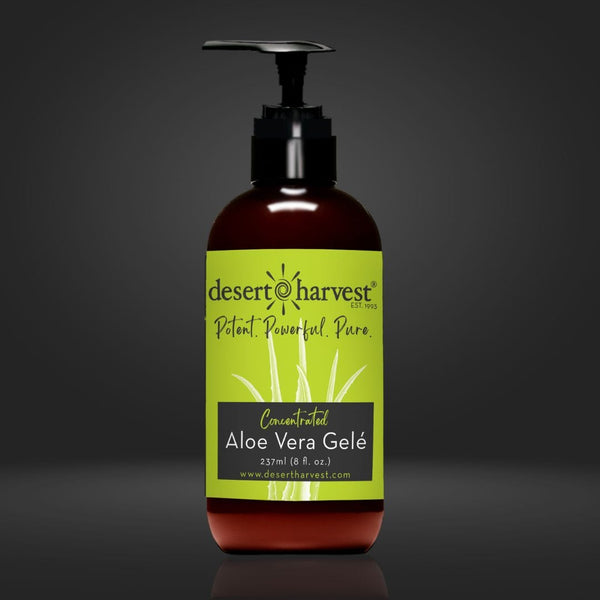
If you would rather not prepare a leaf, Desert Harvest Aloe Vera Gelé is a fragrance-free Aloe Vera skin moisturiser for dry, sensitive and easily irritated skin. It contains no added fragrance, colour or alcohol, and it is vegan. You can use it on the face or body and reapply it through the day. It is a cosmetic, not a medicine, and a patch test before first use is still sensible.
Good to know