Stručne povedané: Aloe Vera je jednou z najobľúbenejších rastlinných zložiek pre ľudí s citlivou pokožkou, a to z dobrého dôvodu. Dobre vyrobený Aloe Vera gél je ľahký, bohatý na vodu a bez vône, čo vyhovuje pokožke, ktorá sa začervená, napína alebo ľahko reaguje. Nevyhovuje úplne každému, preto je rozumné urobiť test na malej ploche, ale pre mnohých ľudí je Aloe Vera prvou voľbou, ktorá upokojuje a prináša úľavu. Tento úprimný sprievodca vysvetľuje prečo a ako ho používať jemne.
Citlivá pokožka nie je jednoznačný pojem. Pre niektorých znamená začervenanie po horúcej sprche; pre iných je to neustály pocit napätia, suché miesta, ktoré sa v zime olupujú, alebo pálenie pri aplikácii nového produktu. Spoločné pre tieto skúsenosti je nízke prahové hodnotenie tolerancie: pokožka reaguje na veci, ktoré pokojnejšia pokožka ignoruje. Pri výbere produktov na reaktívnu pokožku je základné pravidlo jednoduché. Upokojovať, nie odstraňovať.
Prečo Aloe Vera vyhovuje reaktívnej pokožke

Čistený Aloe Vera gél obsahuje približne 99 % vody, a to je dôležité. Citlivá pokožka často zápasí s bohatými, uzatváracími krémami, ktoré pôsobia ťažko alebo zachytávajú teplo, čo môže zanechať pocit podráždenia namiesto úľavy. Gél na vodnej báze sedí ľahko, rýchlo sa vstrebáva a prináša chladivý, osviežujúci pocit, ktorý mnohí ľudia považujú za okamžite upokojujúci na začervenanej alebo prehriatej tvári.
Okrem vody Aloe Vera obsahuje polysacharidy ako acemannan, vitamíny a ďalšie prirodzene sa vyskytujúce rastlinné zlúčeniny. Z kozmetického hľadiska je dôležité to, čo cítite: dobrý Aloe Vera gél hydratuje, upokojuje a pomáha pokožke cítiť sa jemná a pružná, pričom nezanecháva mastný film. Je tiež prirodzene vhodný pre rutinu bez vôní a vegánsku, čo odstraňuje dva z najčastejších spúšťačov reaktívnej pokožky jedným krokom.
Ak chcete komplexnejší pohľad na to, ako Aloe Vera zapadá do každodennej starostlivosti o pokožku, vzhľadu jaziev a intímneho pohodlia, náš sprievodca citlivou pokožkou a Aloe Vera spája celý svet upokojenej pokožky na jednom mieste.
Čo Aloe Vera nie je
Je dobré mať jasno v tom, čo Aloe Vera je a čo nie je. Ako kozmetická zložka sa Aloe Vera stará o povrch pokožky: pohodlie, hydratáciu a to, ako pokožka vyzerá a pôsobí. Nie je to liek a nenahrádza radu lekára alebo lekárnika, ak máte pretrvávajúci kožný problém. Stav, ktorý vyžaduje lekársku starostlivosť, si vyžaduje lekársku starostlivosť. Aloe Vera patrí do jemnejšej, každodennej starostlivosti vo vašej rutine.
Vôňa, jednoduchosť a prečo sú dôležité

Vôňa, či už syntetická alebo z éterických olejov, je jedným z najčastejších dôvodov, prečo citlivá pokožka reaguje. Bezvôňová formula úplne odstraňuje túto premennú. Rovnaká logika platí aj pre zoznamy zložiek všeobecne: čím kratší a jasnejší zoznam, tým ľahšie zistíte, čo vaša pokožka má rada. Preto je transparentný Aloe Vera gél, kde vidíte obsah Aloe Vera a môžete si byť istí, že nebol pridaný žiadny parfum, tak rozumným východiskom.
Jeden detail, ktorý stojí za pochopenie pri porovnávaní Aloe Vera produktov: všetka Aloe Vera prirodzene obsahuje antrachinóny ako aloin v latexovej vrstve listu, ktoré môžu byť dráždivé a nie sú vhodné pre citlivú pokožku. Dôležité nie je, ktorá časť listu je na etikete uvedená, ale či boli tieto antrachinóny odstránené. Hľadajte Aloe Vera, ktorá je označená ako bez antrachinónov, bez aloinu, čistená alebo odfarbená. Aloe Vera od Desert Harvest je vyrobená týmto spôsobom: patentovaný proces odfarbenia odstraňuje aloin a Aloe Vera je lyofilizovaná do čistej, acemannanom bohatej formy, takže na vašu pokožku sa dostáva jemná, upokojujúca časť bez dráždivých latexových zlúčenín.
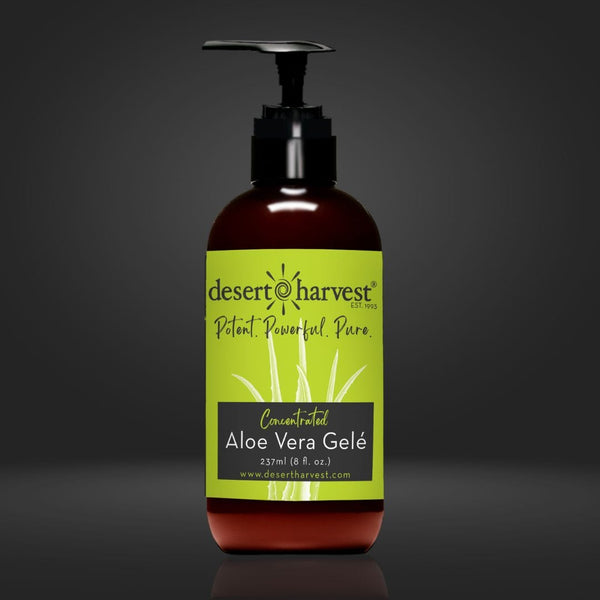
Náš Aloe Vera Gelé od Desert Harvest je postavený presne na tomto princípe: bezvôňový gél s Aloe Vera na prvom mieste, navrhnutý tak, aby pôsobil ľahko a upokojujúco na pokožku, ktorá veľa nevydrží. Je to spoľahlivý, viacúčelový upokojujúci produkt v ponuke a jemný začiatok, ak je pre vás Aloe Vera novinkou.
Ako používať Aloe Vera na citlivú pokožku
Jemnosť závisí rovnako od techniky ako od zložiek. Pokojný prístup veľmi pomáha.
- Najskôr urobte test na malej ploche. Naneste malé množstvo na vnútornú stranu predlaktia a nechajte pôsobiť 24 hodín pred použitím na tvár. Toto je najdôležitejší zvyk pre reaktívnu pokožku.
- Aplikujte na čistú, mierne vlhkú pokožku. Aloe Vera sa krásne nanáša po jemnom čistení a vlhká pokožka pomáha rovnomernému rozotreniu gélu na vodnej báze.
- Používajte tenkú vrstvu. Viac nie je lepšie. Ľahký film sa rýchlo vstrebáva a je pohodlný pod hydratačným krémom alebo opaľovacím krémom.
- Udržujte zvyšok rutiny krátky. Čím menej aktívnych krokov okolo, tým ľahšie zistíte, čo funguje.
Ak je vaším hlavným problémom suchosť a napätie skôr než reaktivita, môže vás zaujať náš sprievodca budovaním bezvôňovej rutiny pre upokojenú pokožku, ktorý podrobnejšie prechádza ranné a večerné kroky.
Kedy byť opatrný
Aloe Vera je všeobecne dobre znášaná, ale žiadna zložka nevyhovuje každému. Malé percento ľudí je citlivých priamo na Aloe Vera, preto je test na malej ploche dôležitý. Ak pocítite pálenie, zvýšené začervenanie alebo svrbenie, ktoré neustupuje, prestaňte produkt používať a dajte pokožke oddych. Ak je reakcia výrazná alebo pretrvávajúca, alebo ak riešite diagnostikovaný kožný problém, poraďte sa pred pokračovaním s lekárnikom alebo lekárom. Aloe Vera je krok pohodlia, nie klinický.
Úprimný záver
Pre väčšinu ľudí s citlivou, suchou alebo ľahko začervenanou pokožkou je bezvôňový gél s Aloe Vera na prvom mieste jednou z najjemnejších a najvšestrannejších vecí, ktoré môžete mať doma. Hydratuje bez ťažkosti, upokojuje pocit tepla a napätia a získava si miesto spoľahlivosťou, nie dramatickosťou. Začnite testom na malej ploche, udržujte rutinu jednoduchú a nechajte svoju pokožku, aby vám povedala zvyšok.

Dobre vedieť
Často kladené otázky
Je Aloe Vera vhodná pre citlivú pokožku?
Môže Aloe Vera gél spôsobiť podráždenie a ako urobiť test na malej ploche?
Je Aloe Vera vhodná pre vegánsku a bezvôňovú rutinu?
Ako často by som mal/a aplikovať Aloe Vera gél?

Iba na vonkajšie použitie. Vyhnite sa oblasti očí a poškodenej pokožke, a pred prvým použitím urobte test na malej ploche. Tento článok poskytuje všeobecné kozmetické informácie o starostlivosti o pleť, nie lekárske rady; naše Aloe Vera produkty sú kozmetika, nie lieky. Ak máte pretrvávajúci kožný problém, poraďte sa so svojím lekárom alebo lekárnikom.