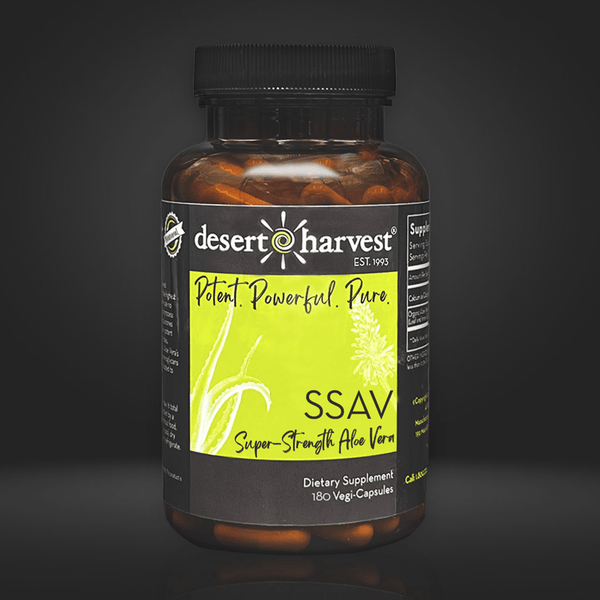
It is a fair question, and one we are asked a lot: is it actually safe to take Aloe Vera every day? The honest answer is that it depends a great deal on how the Aloe Vera in your supplement has been processed, and on your own health picture. Here is a plain, no-spin guide so you can decide with confidence.
Not all Aloe Vera is the same
The biggest thing to understand is that all Aloe Vera naturally contains a bitter yellow latex carrying compounds called anthraquinones, including aloin, which act as harsh laxatives and are not something you want in a daily supplement. What separates a well-made supplement from a rough one is whether those anthraquinones have been removed.
A well-made Aloe Vera supplement is decolourised, meaning the aloin is filtered out to very low levels through a purification step, leaving an anthraquinone-free, acemannan-rich Aloe Vera. This is exactly why product quality matters so much. Our deeper dives on choosing an Aloe Vera supplement and on freeze-dried vs juice walk through how to read this on a label.
What to check before taking it daily
For most healthy adults, a good-quality, decolourised Aloe Vera taken at the suggested amount is well tolerated as a daily supplement. Before you make it a habit, run through this short checklist:
- Anthraquinone-free and purified. Look for wording that confirms the aloin has been removed, such as anthraquinone-free, aloin-free or decolourised.
- A clear daily amount. Follow the serving on the pack rather than taking more in the hope of faster results.
- Take it with water. Capsules are easiest with a full glass, which also fits good hydration habits.
- Give it time. Aloe Vera is a steady, consistency-over-intensity supplement, not an overnight fix. Our note on how much Aloe Vera people take explains realistic timelines.
- Stop and review if anything feels off. Any new digestive upset is a cue to pause and check the product or the dose.
Who should be more cautious
Some people should check with a doctor or pharmacist before starting, even with a gentle product. That includes anyone who is pregnant or breastfeeding, people taking prescription medicines (particularly for diabetes, heart rhythm, water tablets or blood thinners), and anyone with a bowel condition such as Crohn’s or ulcerative colitis. This is about being sensible, not alarmed, and a quick conversation settles it. The compliance background, if you like detail, sits within our Aloe Vera and the bladder hub and the research overview at what the research actually says.
Choosing a daily Aloe Vera you can trust
If you have done the checks and want a steady daily option, our Super Strength Aloe Vera capsules are a high-strength, decolourised, anthraquinone-free product designed exactly for everyday use. You can read the wider picture on our Aloe Vera and the bladder page, the gentler overview at Aloe Vera for bladder comfort, and see how it sits alongside other staples in our daily nutrition range.
Common questions
Can I take Aloe Vera capsules every day, long term?
For most healthy adults, a decolourised, anthraquinone-free product at the recommended amount is intended for daily use. If you have a health condition or take medication, check with your doctor or pharmacist first.
Why do some people say Aloe Vera upsets their stomach?
That is usually down to poorly filtered products that still contain aloin, a natural laxative. A decolourised, anthraquinone-free supplement is made to avoid that issue.
Is more Aloe Vera better?
No. Stick to the amount on the pack. Taking extra does not speed anything up and is more likely to cause digestive upset than benefit.
Food supplements are not a substitute for a varied, balanced diet and a healthy lifestyle. If you have a diagnosed bladder condition, are pregnant or breastfeeding, or take prescription medication, speak to your doctor or pharmacist before starting anything new.