Walk down a supplement aisle, or scroll an online shop, and Aloe Vera capsules can look almost identical. The differences that actually matter for a sensitive bladder are usually tucked away in the small print. If you are comparing Aloe Vera supplements with a sensitive bladder in mind, this calm, plain-English guide sets out seven things worth checking on any label, so you can compare products on facts rather than on marketing.
A quick note before we start. Aloe Vera supplements are food, not medicine, and Aloe Vera carries no authorised EU health claims, so nothing here describes any product as a treatment. Interstitial cystitis, also called bladder pain syndrome, is a recognised long-term condition that affects an estimated 400,000 people in the UK, around 90% of them women, according to the COB Foundation and Bladder Health UK. Those charities, not supplement brands, are the places to read about the condition itself. What follows is simply how to read a label well.
What “best” really means on a food supplement
Because Aloe Vera is a food rather than a medicine, there is no medical league table and no single “best” product. The useful question is not “which one works” but “which one is made and described honestly, and suits my routine”. That turns a confusing purchase into a calm comparison: read the composition, the processing and the quality markers. For the wider picture, our Aloe Vera and the bladder guide covers the background in plain English.
Seven things to check on the label

1. Whether the aloin has been removed
Here is the point most labels gloss over, and the one that matters most for a sensitive system. Every Aloe Vera leaf naturally contains aloin and the other anthraquinones, carried in a bitter yellow latex within the leaf. The part to look for is not a leaf-part label but a clear statement that those anthraquinones have been removed. Good Aloe Vera is purified and decolourised so the aloin is taken out, and an honest brand will say so. A label that talks up the plant but stays silent on whether the aloin has been removed is telling you something by omission.
2. Anthraquinone-free, with the aloin removed
Aloin is a hydroxyanthracene derivative — one of the anthraquinones — found naturally in the latex of every Aloe Vera leaf. It is a strong natural laxative and the part of Aloe Vera that has drawn most regulatory attention. Quality Aloe Vera removes it through a purifying, decolourising process, and may say so as “anthraquinone-free”, “aloin removed” or by stating a maximum aloin level in parts per million. This is a composition fact, not a health claim, and it is worth understanding properly; our companion article on anthraquinone-free Aloe Vera explains it in more depth.
3. How the strength is expressed
Concentration is where labels diverge most, and where it is easiest to be misled. A figure in milligrams tells you the weight per capsule, but not whether that is concentrated powder or a diluted form. A concentration ratio such as 200:1 tells you how much fresh Aloe Vera gel went into the finished powder. Freeze-drying removes the water without high heat, which concentrates the solids. Compare like with like: a large milligram figure of reconstituted or diluted material is not the same as a smaller amount of freeze-dried powder. Our guide to freeze-dried versus juice unpacks this.
4. Polysaccharides and acemannan

Aloe Vera naturally contains polysaccharides, including the one known as acemannan. Some labels state a polysaccharide content; this is a way of describing the raw material, not a benefit. Because heat can degrade these molecules, cold processing and freeze-drying are often highlighted by brands that care about preserving them. Treat any acemannan figure as a transparency marker about composition, nothing more.
5. The format that fits your routine
Capsules and liquids both have a place. Capsules give a measured, taste-free amount, are easy to carry and usually need no preservatives. Juices and gels involve larger liquid volumes, are frequently diluted, and may include preservatives, flavourings or citric acid — worth noting if you are watching acidity. There is no universally better format; choose the one you will keep up with day to day, and read the composition behind it rather than the format on the front.
6. Fillers, additives, allergens and suitability
Turn the pack over and read the full ingredient list, not just the headline. Look for bulking agents, flow agents such as magnesium stearate, sweeteners, flavourings and colours. Check the capsule shell — gelatin versus a vegetarian or vegan cellulose (HPMC) shell — and scan for allergens. A short, clean ingredient list is often kinder to a sensitive system.
7. Who makes it, plus certification and traceability
Finally, check who stands behind the product. Look for a named manufacturer or European distributor, a country of origin, batch information and quality certification such as the IASC seal for Aloe Vera content and purity. In the EU and UK the pack should be clearly labelled “food supplement”, carry a clear daily amount and the usual advisory wording. A traceable supply chain and an accountable, named distributor matter when you are buying something you intend to take regularly.
Putting it together
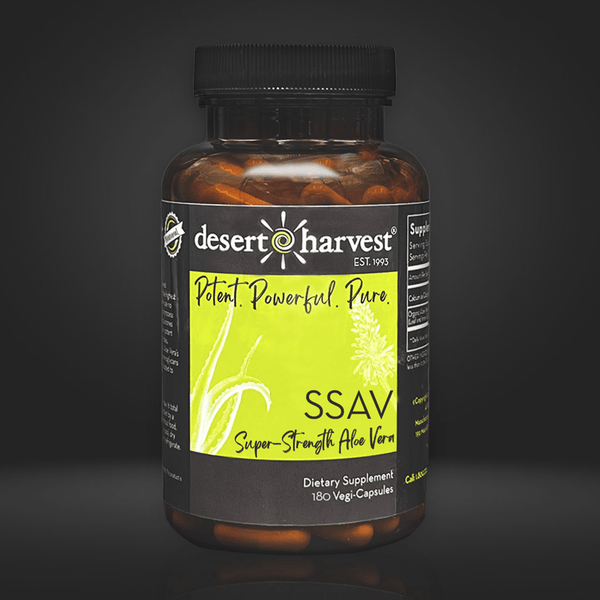
Read those seven points and most Aloe Vera products sort themselves quickly into “transparent” and “vague”. As one option that meets each checkpoint, Desert Harvest Super-Strength Aloe Vera is a freeze-dried, anthraquinone-free, purified Aloe Vera food supplement (180 capsules), distributed in Europe by Bivio Medical B.V. It is the long-standing Aloe Vera many people with a sensitive bladder have chosen as part of a daily routine — described here as a composition and heritage fact, not a medical promise. Whatever you choose, let the label make the case.
Good to know
Frequently asked questions

How do I choose an Aloe Vera supplement if I have a sensitive bladder?
There is no medical “best”, because Aloe Vera is a food supplement rather than a medicine, and the experience of a sensitive bladder differs from person to person. A sensible approach is to compare products on the facts printed on the label: whether the aloin (anthraquinones) has been removed, how the concentration is expressed, the format, the additives, and who stands behind the product. Charities such as the COB Foundation and Bladder Health UK are good neutral sources on the condition itself.
What are anthraquinones and aloin, and why are they removed from Aloe Vera?
Aloin is a hydroxyanthracene derivative (one of the anthraquinones) found naturally in the bitter latex of every Aloe Vera leaf. It acts as a strong laxative and is the part of Aloe Vera that has attracted most regulatory attention. Better-quality supplements remove it through a purifying, decolourising process, and may describe themselves as “anthraquinone-free” or “aloin removed”. This is a composition and quality fact rather than a health claim.
Aloe Vera capsules vs juice — which is better for the bladder?
Neither is inherently better; they suit different routines. Capsules give a measured amount, have no taste, travel easily and usually need no preservatives. Juices and drinks involve larger liquid volumes, are often diluted and may contain preservatives, flavourings or citric acid, which some people with a sensitive bladder prefer to keep an eye on. The most useful comparison is the underlying composition on each label rather than the format alone.
Is Aloe Vera legal in food supplements in the EU?
Yes, Aloe Vera is sold widely as a food supplement across the EU and UK. However, Aloe Vera has no authorised EU health claims, so no health or function claims may be made about it. Regulation (EU) 2021/468 restricted Aloe Vera preparations containing hydroxyanthracene derivatives such as aloin in food; in November 2024 the EU General Court annulled that regulation (case T-189/21) except for danthron, while Germany’s BfR continues to caution on aloin-containing Aloe Vera. Anthraquinone-free, purified Aloe Vera sits outside that concern by composition.

Desert Harvest Super-Strength Aloe Vera is a food supplement, not a medicine, and is not intended to diagnose, treat, cure or prevent any condition. Food supplements should not be used as a substitute for a varied and balanced diet and a healthy lifestyle. If you are pregnant, breastfeeding, taking medication or under medical care, speak to your doctor or pharmacist before starting any new supplement. This article is general education about Aloe Vera and the bladder and is not medical advice.