Acemannan is the main polysaccharide in Aloe Vera: a long chain of mannose sugars carrying acetyl groups, which is why it is also called an acetylated polymannose. It occurs naturally in the gel inside the leaf, and it is the molecule most of the research on Aloe Vera is interested in. This guide explains what acemannan is, why processing decides how much of it survives, and how to read an Aloe Vera label without the marketing, in calm, plain English.
The short version
Aloe Vera is naturally rich in long-chain sugar molecules called polysaccharides. The best known of these is acemannan, an acetylated mannose polymer. When people talk about Aloe Vera acemannan polysaccharides, they are simply describing the characteristic carbohydrate fraction of the Aloe Vera gel, and a freeze-dried, anthraquinone-free Aloe Vera food supplement is one concentrated way to take it.
What is a polysaccharide, really?

A polysaccharide is just a long chain of sugar units joined together. "Poly" means many and "saccharide" means sugar, so the word literally means "many sugars". Familiar examples include starch in a potato and cellulose in plant fibre. They are not the same as the table sugar you taste, because the body handles long chains very differently from single sweet molecules.
Plants use polysaccharides for structure and for storing water and energy. In Aloe Vera, the clear gel is held together by a web of these molecules, which is part of why it feels thick and gel-like. When you read about Aloe Vera polysaccharides, this gel fraction is what is being measured.
Meet acemannan, Aloe Vera's signature molecule
Acemannan is the polysaccharide most associated with Aloe Vera. Chemically it is a long chain of mannose sugar units linked together (a beta-1,4-linked mannan) and decorated with acetyl groups, which is why it is described as an acetylated polymannose. Those acetyl groups are part of what makes acemannan distinctive among plant polysaccharides.
A few plain-English points worth knowing:
- It is a family, not a single fixed molecule. Acemannan chains vary in length and molecular weight depending on the plant and how it is handled, so "acemannan content" is really a measure of a range of related molecules.
- It lives in the gel. The clear gel is where these polysaccharides are concentrated, and a well-made supplement is built around preserving that fraction.
- It is naturally present, not added. A good Aloe Vera supplement does not spike in acemannan; it simply preserves what the plant already made.
This is why the most defensible thing any brand can say is a composition fact: anthraquinone-free Aloe Vera is naturally a source of Aloe Vera polysaccharides including acemannan. That describes what is in the product, without making any promise about what it does in the body.
What gets left out: aloin and the anthraquinones

Every Aloe Vera leaf naturally contains two very different things. There is the gentle gel, which is where the polysaccharides sit. And there is a bitter compound called aloin, one of a group of anthraquinones, which the plant produces in the latex just beneath the green rind. Aloin is intensely bitter and acts as a strong laxative, and because it is naturally part of the plant, all raw Aloe Vera carries some of it. The question that actually matters is not which slice of the leaf was used, but whether the aloin has been taken out.
This is the heart of the anthraquinone-free story. Desert Harvest Aloe Vera is purified so that the aloin and the other anthraquinones are removed, keeping the polysaccharide fraction while leaving out the part of the plant that European food-safety bodies have repeatedly scrutinised. The decolourising step that strips out the bitter, coloured aloin is exactly what makes the difference, and it is why "anthraquinone-free" and "aloin removed" are the words to look for. If you would like the regulatory detail, our sibling guide on what the bladder's GAG layer is and the wider Aloe Vera and the sensitive bladder hub set out the science and the rules side by side.
Why processing makes or breaks polysaccharides
Here is the part many label-readers miss: polysaccharides are delicate. Long sugar chains can be broken down by heat, time and rough processing, and once they are fragmented you cannot put them back together. So how Aloe Vera is handled after harvest matters as much as the plant itself.
This is where freeze-drying (also called lyophilisation) comes in. Freeze-drying removes water at very low temperatures by turning ice straight to vapour under vacuum, rather than cooking the moisture off with heat. Because the gel is never heated hard, the fragile polysaccharide structure is better preserved, and the result is a light, concentrated powder that can be put into capsules.
Reading a label without the marketing
- Has the aloin been removed? "Anthraquinone-free", "aloin removed", "purified" or "decolourised" all point to Aloe Vera with the bitter latex fraction taken out. This is the single most useful thing to look for, because all raw Aloe Vera contains some aloin until it is removed.
- How is it dried? Freeze-dried generally handles the polysaccharides more gently than heat-drying.
- Concentration. Ratios such as 200:1 describe how much fresh gel went into the powder; higher concentration means more material per capsule.
- Composition language. Honest labels state what is in the product (a source of Aloe Vera polysaccharides) rather than promising a health outcome.
For more on this choice, the companion article comparing Aloe Vera formats across the blog walks through capsules, juice and concentration in everyday terms.

Acemannan, the GAG layer and the bladder: what the science does and does not say
The bladder is lined with a protective coating often called the GAG layer (short for glycosaminoglycans), itself made of sugar-based molecules. Because acemannan is also a sugar-based polysaccharide, the two are sometimes mentioned together when people read about the bladder lining. This is background biology only, and it should not be taken to mean that any Aloe Vera food supplement acts on the GAG layer or changes how the bladder feels. Independent charities such as the COB Foundation, Bladder Health UK and the Interstitial Cystitis Association are good, neutral places to read about the bladder lining itself, offered here as sources of information rather than endorsements of any product.
It is important to keep two things separate. Describing the biology of the GAG layer is education. It is not the same as saying that any food supplement acts on the bladder, treats a condition or changes symptoms, and nothing here should be read that way. Aloe Vera is a food, and the science above is offered as background, not as a promise.
Where Super-Strength Aloe Vera fits
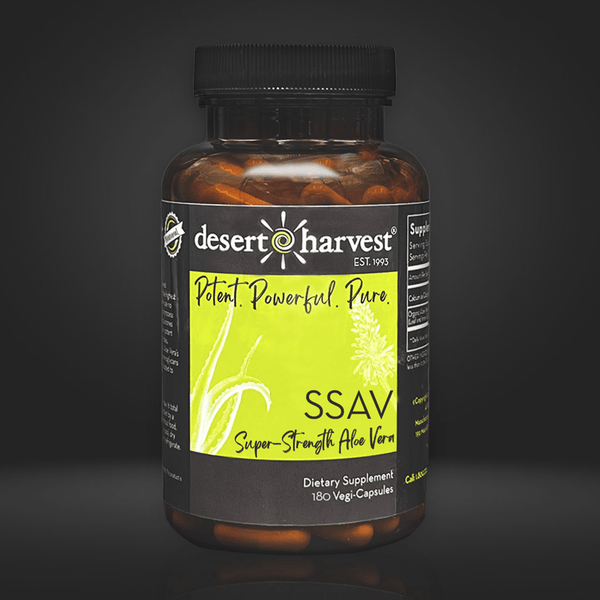
For readers who want a concentrated, well-characterised source of these molecules, Super-Strength Aloe Vera is a freeze-dried, anthraquinone-free Aloe Vera food supplement, naturally a source of Aloe Vera polysaccharides including acemannan. Many people with a sensitive bladder choose to take it as part of a calm daily routine, alongside a varied diet and the lifestyle habits covered across this blog. It is offered as one option among many, never as a treatment.
Good to know

Frequently asked questions
What is acemannan?
What is freeze-dried Aloe Vera and why does processing matter?
What are anthraquinones and aloin, and why are they removed from Aloe Vera?
Aloe Vera capsules vs juice, which is better for the bladder?
Can you buy an acemannan supplement?
What is acemannan good for?
What is the difference between acemannan and Aloe Vera?
Is acemannan in Aloe Vera juice?
Is acemannan well tolerated?
Food supplement. This article is general information about Aloe Vera and is not medical advice. Food supplements are not a substitute for a varied, balanced diet and a healthy lifestyle. If you have a diagnosed condition, are pregnant or breastfeeding, or take any medication, speak to your doctor or pharmacist before starting a new supplement. Desert Harvest Europe is operated by Bivio Medical B.V., the European distributor of Desert Harvest.