Kurz gesagt: Das Wort „Aloe Vera“ auf der Vorderseite einer Flasche sagt wenig aus. Um ein Aloe-Vera-Gel zu beurteilen, drehen Sie es um und lesen die Zutatenliste, in der Aloe Vera oben stehen sollte, achten Sie auf einen angegebenen Aloe-Vera-Prozentsatz, wenn die Marke transparent ist, prüfen Sie, ob die Aloe Vera gereinigt wurde, sodass die natürlich vorkommenden Anthrachinone (Aloin) entfernt sind, und sehen Sie, was sonst noch enthalten ist, einschließlich Duftstoffe, Farbstoffe und Alkohol. Ein kurzes, ehrliches Etikett schlägt meist ein langes, vages. So entschlüsseln Sie es.
Aloe-Vera-Gele variieren stark, von leicht Aloe-Vera-duftendem Wasser mit langer Zusatzstoffliste bis zu einer wirklich Aloe-Vera-dominierten Formel. Das Marketing auf der Vorderseite verrät selten, was wirklich drin ist. Die wahre Geschichte steht auf der Rückseite, in der Zutatenliste, und wenn man weiß, worauf man achten muss, dauert das Lesen nur wenige Sekunden.
Beginnen Sie mit der Reihenfolge der Inhaltsstoffe

Nach Gesetz werden kosmetische Inhaltsstoffe in der Reihenfolge ihrer Menge von der größten zur kleinsten mit ihren standardisierten INCI-Namen aufgeführt. Daher ist die Position von Aloe Vera in der Liste wichtig. Aloe Vera erscheint als Aloe Barbadensis Leaf Juice, Aloe Barbadensis Leaf Juice Powder oder ähnlich. Steht Aloe Vera ganz oben, macht sie einen großen Anteil der Formel aus. Steht sie weiter unten, unter mehreren anderen Inhaltsstoffen, ist wahrscheinlich nur wenig davon enthalten, egal wie grün die Flasche aussieht.
Eine wichtige Nuance: Viele Aloe-Vera-Gele listen Wasser (Aqua) als erste Zutat, weil das Gel durch Rekonstituieren von Aloe-Vera-Pulver mit Wasser hergestellt wurde. Das ist an sich kein Warnsignal. Entscheidend ist, ob Aloe Vera deutlich weiter oben in der Liste steht und nicht nur als kleiner Anteil ganz unten.
Achten Sie auf einen angegebenen Prozentsatz
Transparente Marken geben oft einen Aloe-Vera-Prozentsatz an, wie zum Beispiel ein Aloe-Vera-Gel mit hohem Anteil, und erklären, ob sich dieser auf Aloe-Vera-Saft oder Pulver bezieht. Eine angegebene Zahl ist ein gutes Zeichen, da sie zeigt, dass die Marke bereit ist, konkret zu sein. Seien Sie etwas vorsichtig bei sehr runden Marketingzahlen, die in der Zutatenliste nirgends auftauchen. Wenn ein Etikett behauptet, fast ausschließlich Aloe Vera zu enthalten, die Liste aber oben viele andere Inhaltsstoffe aufweist, stimmt das nicht überein.
Wenn Sie das weniger abstrakt verstehen möchten, erklärt unser Leitfaden zu Aloe Vera für empfindliche Haut, warum ein hoher, klar angegebener Aloe-Vera-Anteil und eine kurze Zutatenliste für reaktive Haut am besten geeignet sind.
Überprüfen Sie, wie die Aloe Vera gereinigt wurde
Dies ist der Teil, den das meiste Marketing auf der Vorderseite der Flasche überspringt, und er ist wichtiger als Farbe oder Duft. Alle Aloe Vera enthalten natürlicherweise Anthrachinone, hauptsächlich Aloin, im bitteren gelben Latex direkt unter der Blatthaut. Diese Verbindungen sind nicht erwünscht in einem Hautpflegegel. Wichtig ist also nicht die Herkunftsbezeichnung auf dem Etikett, sondern ob die Aloe Vera richtig gereinigt wurde, sodass die Anthrachinone entfernt sind.
Hilfreiche Begriffe auf einem Etikett oder einer Produktseite sind anthrachinonfrei, aloinfrei, gereinigt oder entfärbt. Ein gut hergestelltes Gel kann auch gefriergetrocknet und konzentriert sein (man sieht manchmal Angaben wie 200:1), was den beruhigenden, acemannanhaltigen Teil der Pflanze bewahrt und das Aloin zurücklässt. Eine Marke, die dies erklärt, zeigt, dass sie sich Gedanken darüber gemacht hat, was in die Flasche kommt, anstatt einfach ein Blatt zu pressen und es natürlich zu nennen.
Schauen Sie, was sonst noch enthalten ist

Aloe Vera ist nur ein Teil des Ganzen. Überprüfen Sie die restlichen Inhaltsstoffe auf einige wichtige Punkte, besonders bei empfindlicher Haut:
- Duft / Parfum. Ein häufiger Auslöser für empfindliche Haut. Duftfreie Formeln verzichten komplett darauf.
- Farbe. Ein grüner Farbton wird hinzugefügt; gereinigtes Aloe-Vera-Gel ist von Natur aus klar bis blass. Farbstoffe sind kosmetisch und kein Qualitätsmerkmal.
- Alkohol. Einige Gele verwenden austrocknende Alkohole weit oben in der Liste, die sich auf trockener Haut rau anfühlen können. Fetthaltige Alkohole wie Cetylalkohol sind anders und wirken als Weichmacher.
- Konservierungsmittel. Ein wasserbasiertes Gel benötigt ein Konservierungssystem, um sicher zu bleiben; das ist normal und gut.
- Beruhigende und feuchtigkeitsspendende Zusätze wie Glycerin oder Panthenol, die willkommene Ergänzungen sein können.
Eine schnelle Etiketten-Checkliste
| Was zu prüfen ist | Gutes Zeichen | Ein zweiter Blick lohnt sich |
|---|---|---|
| Position der Aloe Vera in der Liste | Nahe am Anfang | Ganz unten, unter vielen Zusatzstoffen |
| Angegebener Aloe-Vera-Prozentsatz | Klar angegeben und mit der Liste übereinstimmend | Große Behauptung, vage Liste |
| Aloe Vera von Anthrachinonen gereinigt | Als anthrachinonfrei, aloinfrei, gereinigt oder entfärbt beschrieben | Keine Angabe, wie das Aloin entfernt wurde |
| Duftstoffe | Duftfrei | Parfum weit oben in der Liste, für empfindliche Haut |
| Farbe | Natürlich klar bis blass | Leuchtend grün durch zugesetzte Farbe |
| Listenlänge | Kurz und lesbar | Sehr lang mit mehreren Auslösern |
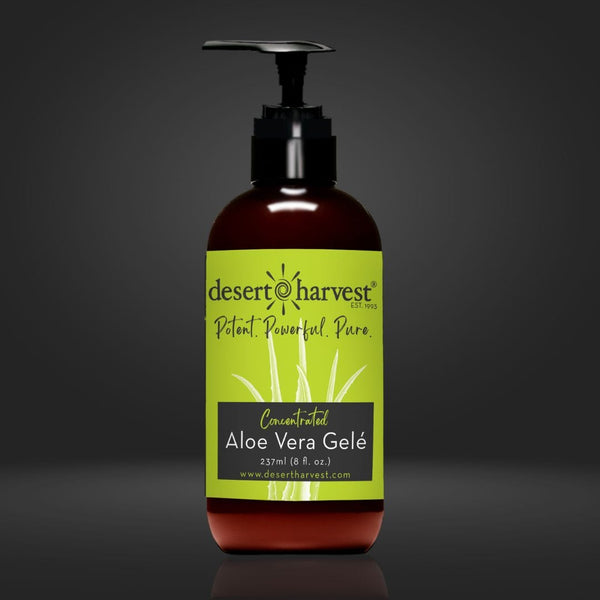
Genau dieses Prinzip steckt hinter unserem Aloe Vera Gelé von Desert Harvest: eine Aloe-Vera-zuerst, duftfreie Formel, deren gereinigte, entfärbte Aloe Vera von den natürlich vorkommenden Anthrachinonen befreit wurde, mit einer kurzen, ehrlichen Zutatenliste. Desert Harvest wird in den USA hergestellt, und Bivio Medical vertreibt es in ganz Europa. Wie Transparenz sich durch die gesamte Produktreihe zieht, sehen Sie auf unserem Hub für empfindliche Haut und Aloe Vera.
Ein Hinweis zur Lagerung und Frische
Zwei kleine Symbole sind es wert, bekannt zu sein. Das offene-Glas-Symbol mit einer Zahl und einem M (zum Beispiel 12M) gibt die Zeit nach dem Öffnen an, in der das Produkt verwendet werden sollte. Ein Mindesthaltbarkeitsdatum kann ebenfalls bei Produkten mit kürzerer Haltbarkeit erscheinen. Ein Gel kühl und verschlossen zu lagern, hilft, es frisch und angenehm in der Anwendung zu halten.
Das Wichtigste
Man muss kein Chemiker sein, um ein gutes Aloe-Vera-Gel auszuwählen. Drehen Sie die Flasche um, prüfen Sie, ob Aloe Vera weit oben in der Liste steht, achten Sie auf einen klar angegebenen Prozentsatz, sehen Sie nach, ob die Aloe Vera gereinigt wurde, sodass die natürlich vorkommenden Anthrachinone entfernt sind, und achten Sie auf Duftstoffe, Farbe und aggressive Alkohole, besonders wenn Ihre Haut empfindlich ist. Ein kurzes, transparentes Etikett ist fast immer ein besseres Zeichen als eine glänzende Vorderseite und eine vage Rückseite.

Gut zu wissen
Häufig gestellte Fragen
Welchen Prozentsatz an Aloe Vera sollte ein gutes Gel enthalten?
Warum ist mein Aloe-Vera-Gel grün?
Was bedeutet anthrachinonfrei oder aloinfrei bei Aloe Vera?
Wie erkenne ich, ob ein Aloe-Vera-Gel duftfrei ist?
Was bedeutet das offene Tiegel-Symbol mit einer Zahl?

Nur zur äußerlichen Anwendung. Vor der ersten Anwendung einen Verträglichkeitstest durchführen. Dies sind allgemeine kosmetische und kennzeichnungsbezogene Informationen, keine medizinische Beratung; unsere Aloe-Vera-Produkte sind Kosmetika, keine Arzneimittel. Bei anhaltenden Hautproblemen wenden Sie sich bitte an Ihren Arzt oder Apotheker.