If you have ever looked for a cranberry alternative for everyday urinary wellbeing, you are far from alone. Cranberry has been the default answer for urinary wellbeing for decades, yet plenty of people find the juice too sugary, the tablets awkward to dose, or simply want to know what else is out there. This guide takes a calm, evidence-aware look at the main alternatives, chiefly D-mannose and the European botanical heather (Calluna vulgaris), and at how each one might fit into an everyday urinary tract maintenance routine rather than a quick fix.
The short version: no single ingredient has a strong, settled case for urinary wellbeing, and in the EU no food supplement is permitted to claim it prevents or treats infection. What you can do is build a sensible daily routine of good hydration, a few simple habits and, if you choose, a food supplement you trust, then pick your ingredient on honest information rather than marketing.
Why people look beyond cranberry
There are a few reasons cranberry no longer feels like the automatic choice. The first is taste and sugar, because cranberry juice is naturally sharp and is usually sweetened. The second is dosing: the active compounds in cranberry, the proanthocyanidins (PACs), vary widely between products, and research points to a meaningful daily dose of around 36mg PACs that many juices and low-strength tablets do not contain. The third is curiosity about a more local option, since cranberry is largely an American berry while heather (Calluna vulgaris) is a native European plant with a long heritage across the continent.
What the research actually says about cranberry
It is worth being fair to cranberry. A 2023 Cochrane review, which pooled 50 trials and more than 8,000 participants, reported a roughly 26% reduction in the risk of repeat infection among women prone to recurrence, with an overall result rated as moderate-certainty evidence. That is a real, if modest, signal, and stronger than some alternatives, although dose and product type clearly matter.
D-mannose: the most-discussed alternative

D-mannose is a simple sugar, related to glucose, that the body uses for little energy. It became popular as a gentle daily option, and laboratory research has explored how D-mannose may interact with the way certain bacteria such as E. coli behave in the urinary tract. That mechanistic interest is genuine, but the human evidence has cooled recently.
In 2024, the large UK MERIT trial, published in JAMA Internal Medicine, followed 598 women with recurrent urinary infections over six months. Around 51% of those taking daily D-mannose experienced a medically attended infection, compared with about 56% on placebo, a difference small enough that the authors concluded D-mannose should not be routinely recommended for prevention in primary care. A 2022 Cochrane review had already rated the existing D-mannose evidence as low quality. None of this makes D-mannose unsafe or pointless, but the honest picture is more mixed than the marketplace often suggests. For a fuller comparison, see our companion article on D-mannose versus cranberry.
Heather (Calluna vulgaris): the European option
Heather, or Calluna vulgaris, is the small purple-flowering shrub that carpets much of northern and western Europe. It has a centuries-long heritage in European herbal and folk tradition connected with the urinary system, and has historically been taken as a tea or infusion. Unlike cranberry and D-mannose, heather is almost absent from mainstream urinary comparisons, which is partly why it interests people looking for something different and distinctly European.
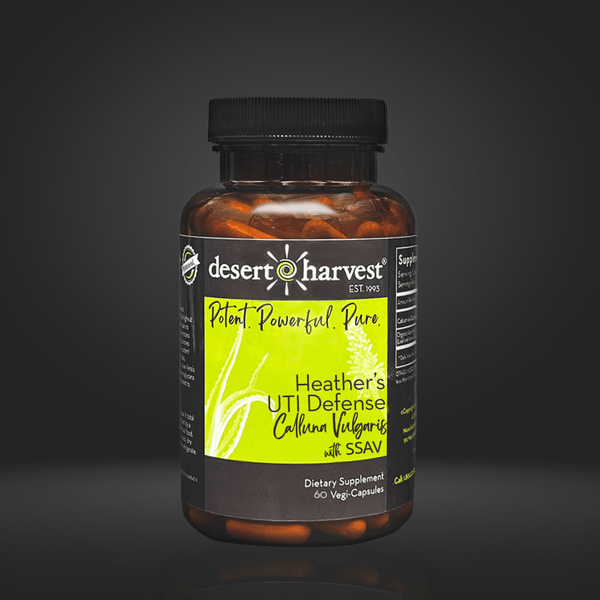
Heather is the botanical behind Heather's UTI Defense, a food supplement some people choose to include as part of an everyday urinary comfort routine, alongside good hydration and sensible habits. As with any food supplement, it is a companion to a healthy lifestyle rather than a substitute for medical care, and it is not a treatment for any condition. For the wider context, our pillar guide to urinary comfort and bladder wellbeing sets out the whole picture.
A neutral side-by-side

None of these ingredients is a cure, and EU rules do not allow any to be marketed as one. Here is how they compare in plain terms:
- Cranberry (PACs): the most-studied option; a 2023 Cochrane review suggests a modest reduction in recurrence in women, but only at a worthwhile PAC dose. Best taken as a standardised capsule rather than sweetened juice.
- D-mannose: a simple sugar that is generally well tolerated and popular for daily use, though the 2024 MERIT trial found no clear benefit over placebo, so expectations should be measured. Typically taken in roughly 2g daily amounts in studies.
- Heather (Calluna vulgaris): a native European botanical with a long herbal heritage; under-studied compared with the other two, but a differentiated, plant-based choice for those who prefer a European tradition and a simple daily ritual.
Everyday habits that support urinary tract maintenance
Whichever ingredient you favour, the foundations matter more than any single supplement. General guidance from urology bodies such as the European Association of Urology and charities including Bladder Health UK tends to emphasise the same calm basics:
- Stay well hydrated. Drinking enough fluid across the day helps the urinary tract do its everyday job, and water is the simplest choice.
- Do not routinely hold on. Emptying the bladder when you need to, rather than delaying for long stretches, is part of looking after urinary comfort.
- Mind everyday hygiene. Simple habits, such as wiping front to back and washing with plain water rather than heavily perfumed products, are widely suggested.
If your symptoms are frequent, severe or accompanied by fever, back pain or blood, that is a matter for your GP or pharmacist rather than any supplement. Recurrent problems deserve a proper assessment.
An honest word on EU rules
You may notice that careful brands talk about "urinary comfort" and "everyday maintenance" rather than "preventing infections". That is not vagueness, it is the law. The European Food Safety Authority (EFSA) has assessed and rejected every cranberry and D-mannose urinary health claim ever submitted, so no food supplement, from any company, may legally claim to prevent, treat or reduce the risk of urinary infections in the EU. Heather sits on the EU list of botanicals still under evaluation. The practical upshot is reassuring: anyone promising that a pill will "stop" or "cure" infections is overstepping the rules, so honesty about the evidence is a fair sign of a brand worth trusting.

Good to know
Frequently asked questions
What can I take instead of cranberry for urinary health?
Is D-mannose or cranberry better for the urinary tract?
What is heather (Calluna vulgaris) traditionally used for?
Are cranberry tablets as good as cranberry juice?

Food supplements are not a substitute for a varied, balanced diet and a healthy lifestyle, and should not be used to treat, prevent or cure any disease. If you have recurrent or severe urinary symptoms, please speak to your doctor or pharmacist. Information in this article is general education about urinary wellbeing and is not medical advice.