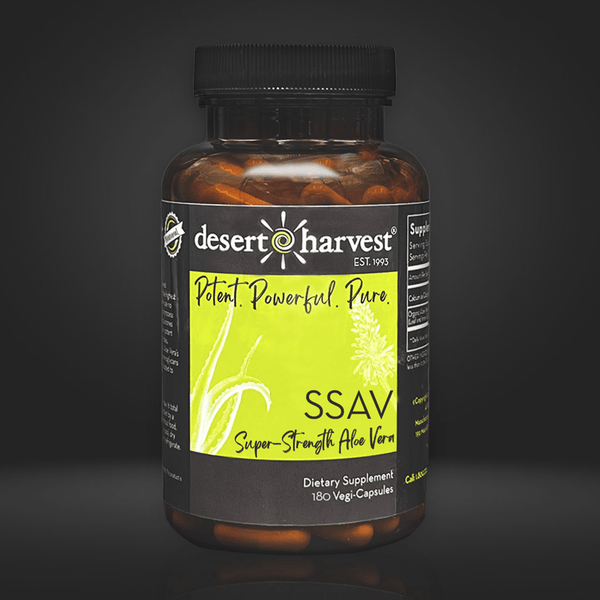
Aloe Vera for bladder comfort is one of the most searched topics among people living with a sensitive bladder, and also one of the most confusing. This guide gathers the questions people ask most and answers them calmly, in plain English, and within European food rules. A quick orientation first: Aloe Vera capsules such as Desert Harvest Super-Strength Aloe Vera are a food supplement, not a medicine. Many people choose them as part of a wider, gentle daily routine. Nothing here describes them as a treatment for any condition.
First time? Give it a fair three-month trial.
Many people notice something in the first four to eight weeks, but the calming effect tends to keep building over the first three months — so for a first trial, give it a full three months before you judge it. At six capsules a day a 180-capsule bottle lasts about a month, which is why a first order of three bottles — a three-month supply — is the sensible way to start. Super-Strength Aloe Vera.
What do people mean by "bladder comfort"?
"Bladder comfort" is everyday language rather than a medical term. People tend to use it to describe the general experience of a bladder that feels settled and unbothered through an ordinary day. Some readers arrive here after being told they have a sensitive or painful bladder; others are simply curious about looking after their urinary wellbeing. Whatever brings you, the calm starting point is the same: small, consistent habits, and realistic expectations.
For deeper background on the biology, our pillar guide, Aloe Vera and the Sensitive Bladder, walks through how the bladder works and what the research currently explores, all in plain English.
Does Aloe Vera help a sensitive bladder?

This is the question almost everyone asks, and the honest answer is that it is still being studied. Aloe Vera is a food, so under EU and UK rules it cannot be presented as something that treats, relieves or prevents any bladder condition. What we can share is the research context. A double-blind, placebo-controlled clinical trial at Wake Forest University (ClinicalTrials.gov reference NCT04734106) is independently examining freeze-dried Aloe Vera in people living with interstitial cystitis. As of 2026 it remains a study in progress, which means no conclusions can be drawn yet, by us or anyone else, and it is not a statement about what any particular product does.
Reputable patient charities such as the COB Foundation, Bladder Health UK and the Interstitial Cystitis Association are the right places to understand the conditions themselves. We cite them as independent sources of education, not as endorsements of any product.
What is actually inside the Aloe Vera?
Composition is something we can talk about openly, because it is fact rather than claim. Aloe Vera naturally contains a group of long-chain sugars called polysaccharides, the best known of which is acemannan. When you see a brand describe its Aloe Vera as "a source of Aloe Vera polysaccharides including acemannan", that is a statement about what the plant contains, not a promise about what it will do for you.
Two further details that people ask about:
- Anthraquinones removed, or not. All Aloe Vera naturally contains aloin and related anthraquinones in its latex, the bitter compounds associated with a harsh laxative effect. The detail that actually matters is whether they have been taken out. A purified, decolourised Aloe Vera has had these removed, so the thing to look for on a label is wording like "anthraquinone-free" or "aloin removed" rather than which part of the leaf it came from.
- Freeze-dried vs juice. Freeze-drying removes water at low temperature, which is one way to produce a concentrated, shelf-stable powder for capsules. Juices and gels are a different format, usually less concentrated by volume. Neither is automatically "better"; they simply suit different preferences.
Why does "anthraquinone-free" keep coming up?

If you research Aloe Vera you will quickly meet the words aloin and anthraquinones (technically, hydroxyanthracene derivatives, or HADs). These are naturally present mainly in the latex just under the leaf skin, and they are the part of the plant associated with a harsh laxative effect. A careful, patented decolourising process removes them, which is why quality-focused brands describe their product as anthraquinone-free or "aloin removed". This is a composition and quality fact about the supplement, not a health claim.
It also helps explain the European regulatory story. In 2021 the Commission restricted certain Aloe Vera leaf preparations containing HADs in food (Regulation (EU) 2021/468). In November 2024 the EU General Court annulled most of that restriction in the case Aloe Vera of Europe v Commission (T-189/21), leaving only danthron in scope. The practical point for readers is simple: an aloin-removed, anthraquinone-free Aloe Vera sits outside that whole debate by composition, whichever way the legal back-and-forth settles.
Is Aloe Vera legal in EU food supplements?
Yes. Aloe Vera is widely sold as a food supplement across the EU and the UK. What it cannot carry is a health claim: Aloe Vera has no authorised EU health claims on the official register, so a compliant brand will describe what its product is (a freeze-dried, anthraquinone-free, purified Aloe Vera food supplement) rather than what it does for any condition. If you ever see an Aloe Vera product claiming to treat or get rid of a named bladder disease, that is a sign the marketing is not following European rules.
How do people use it day to day?
Because Aloe Vera is a food supplement, there is no medical dose, and no specific outcome can be promised. People who include it in their routine generally take it consistently, every day, and give it time rather than expecting anything overnight. Many start gently and follow the directions on the pack. As with any supplement, it is sensible to speak to your doctor or pharmacist first, especially if you are pregnant, breastfeeding, or taking medication.
Where Desert Harvest fits in
Desert Harvest Super-Strength Aloe Vera is a concentrated (200:1), freeze-dried, anthraquinone-free, acemannan-rich Aloe Vera food supplement, distributed across Europe by Bivio Medical B.V. (Desert Harvest Europe). It is one option many people with a sensitive bladder choose to keep in their daily routine, presented here as a food, alongside the lifestyle and dietary habits covered elsewhere in this hub. For a side-by-side look at formats, see our sibling guide on freeze-dried versus juice Aloe Vera.

Good to know
Frequently asked questions
How long do people usually take Aloe Vera for?
Can men take Aloe Vera as well?
Can I take Aloe Vera alongside my other medication?
Is Desert Harvest Aloe Vera available in Europe and the UK?

Food supplement. Desert Harvest Super-Strength Aloe Vera is a food supplement and is not intended to diagnose, treat, cure or prevent any disease. A food supplement should not be used as a substitute for a varied, balanced diet and a healthy lifestyle. If you are pregnant, breastfeeding, taking medication or under medical care, speak to your doctor or pharmacist before use. The educational sections above describe bladder conditions and ongoing research for information only and do not imply that this or any food supplement treats them.