If you are working out which foods and drinks sit comfortably with a sensitive bladder, a quick pH reference can save a great deal of guesswork. The chart below lists common foods and drinks by their approximate pH, roughly ordered from the most acidic to the most neutral. Treat it as an at-a-glance starting point rather than a rulebook, and read it alongside our wider guide to food acid and the bladder.
How to read the pH scale
The pH scale runs from 0 to 14. Lower numbers are more acidic, 7 is neutral, and higher numbers are alkaline. Most everyday foods and drinks sit somewhere between pH 2 and pH 7. As a rough guide, food scientists often treat anything below pH 4.6 as a "high-acid" food. The lower the number, the sharper the acid load, so lemon juice at around pH 2 is far more acidic than a ripe banana at around pH 5. The exact figure matters less than the band a food sits in, which is why we have grouped the chart into broad ranges.
The food pH chart
| Food or drink | Approximate pH | Band |
|---|---|---|
| Lemon and lime juice | 2.0 – 2.6 | Higher acid |
| Cola and many fizzy drinks | 2.4 – 2.8 | Higher acid |
| Cranberry juice | 2.5 – 2.7 | Higher acid |
| Vinegar and pickled foods | 2.5 – 3.4 | Higher acid |
| Wine | 3.0 – 3.5 | Higher acid |
| Grapefruit | 3.0 – 3.3 | Higher acid |
| Strawberries and blueberries | 3.1 – 3.9 | Higher acid |
| Pineapple | 3.2 – 4.0 | Higher acid |
| Orange juice | 3.3 – 4.2 | Higher acid |
| Apple | 3.3 – 4.0 | Higher acid |
| Beer | 4.0 – 4.5 | Moderately acidic |
| Tomatoes and tomato juice | 4.1 – 4.6 | Moderately acidic |
| Yoghurt | 4.4 – 4.8 | Moderately acidic |
| Brewed coffee | 4.8 – 5.1 | Milder |
| Black tea | 4.9 – 5.5 | Milder |
| Banana (ripe) | 4.5 – 5.2 | Milder |
| Bread | 5.3 – 5.8 | Milder |
| Cheddar cheese | 5.2 – 5.9 | Milder |
| Potatoes | 5.4 – 5.9 | Near neutral |
| Carrots | 5.9 – 6.4 | Near neutral |
| Cooked chicken | 6.0 – 6.5 | Near neutral |
| Cooked rice and pasta | 6.0 – 6.7 | Near neutral |
| Cow's milk | 6.4 – 6.8 | Near neutral |
| Still water | 6.8 – 7.2 | Near neutral |
Values are approximate and drawn from published food-science references. The exact figure for any item shifts with variety, ripeness and preparation.
What the numbers cannot tell you
A single figure hides a lot of variation. A green banana is more acidic than a ripe one, and a cup of coffee depends on the bean, the roast and how it is brewed. Cooking, tinning and fermenting all move the number, and a squeeze of lemon or a tomato-based sauce can change the acid load of an entire meal. Personal comfort is just as individual, so two people can respond quite differently to the same glass of orange juice. The most reliable approach is to use the chart as a prompt for your own food diary. The ICA and IC Network publish detailed dietary guidance that pairs well with this kind of self-tracking, and our companion piece on higher-acid foods on an IC-friendly diet looks at the practical swaps in more depth.
Using the chart as part of a routine
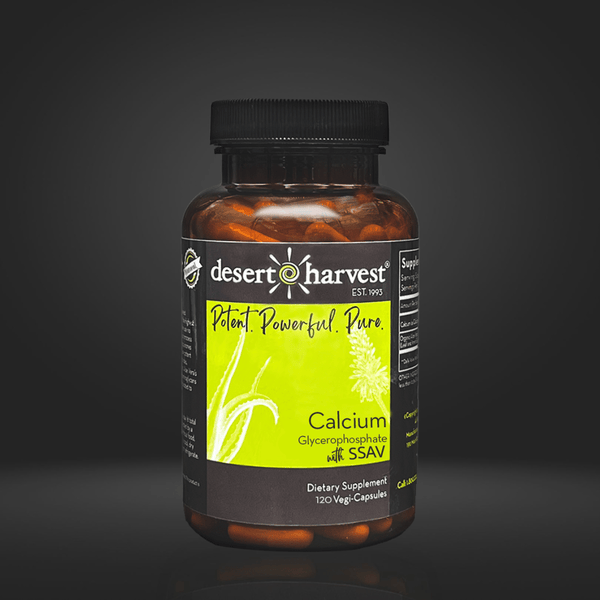
Once you can see which of your favourites sit at the sharper end of the scale, you have a few choices: enjoy them less often, swap them for a milder option, or buffer them before you eat. Calcium glycerophosphate, the same active ingredient many people used in Prelief in the US, is a pre-meal food-acid buffer that may help reduce the acid content of foods and drinks. Our CalGly capsules are taken just before a higher-acid meal, and you can read exactly how calcium glycerophosphate buffers food acid if you would like the detail. Used alongside a chart like this one, it offers a way to keep more of the foods you enjoy as part of a bladder-friendly routine. There is more in this series on the bladder-friendly living blog.
Good to know
Frequently asked questions
What does pH actually measure?
pH measures how acidic or alkaline something is on a scale from 0 to 14. Lower numbers are more acidic, 7 is neutral, and higher numbers are alkaline. Most foods and drinks sit between roughly pH 2 and pH 7, and the lower the figure, the sharper the acid load.
Are low-pH foods bad for a sensitive bladder?
Not inherently. Comfort is very individual, and a low pH simply tells you a food is more acidic, not how you personally will respond to it. Use the chart as a starting point alongside a food diary and the dietary guidance published by the ICA and IC Network.
Why are the pH values shown as ranges rather than single numbers?
Because the acidity of a real food varies with its variety, ripeness, growing conditions and preparation. A green banana differs from a ripe one, and brewing or cooking shifts the figure too, so a range is more honest than a single point.
Can I still enjoy higher-acid foods?
Many people choose to. The usual options are to have them less often, swap them for a milder choice, or use a pre-meal buffer. Calcium glycerophosphate, the same active ingredient many people used in Prelief in the US, may help reduce the acid content of foods and drinks when taken before a meal.
Food supplement. Do not exceed the recommended daily dose. Food supplements should not be used as a substitute for a varied, balanced diet and a healthy lifestyle.