If you have looked into Aloe Vera capsules for a sensitive bladder, you have probably met two words that sound alarming: aloin and anthraquinones. You may also have read that Aloe Vera was once "banned" across the EU, then "unbanned". The short version: certain Aloe Vera leaf preparations were restricted, the rule was largely annulled by an EU court in late 2024, and Aloe Vera with the aloin and other anthraquinones removed sits outside the whole debate. Here is the full picture, calmly explained.
What aloin and anthraquinones actually are
All Aloe Vera naturally contains a thin layer of bitter yellow latex sitting just beneath the rind. That yellow latex is where the compounds in question live, before any purification step.
The latex contains anthraquinones — a family of naturally occurring compounds. The best known is aloin (also called barbaloin), alongside relatives such as aloe-emodin and emodin. As a group, these are known in EU law as hydroxyanthracene derivatives, or HADs. They are intensely bitter and have a strong laxative effect, which is why Aloe Vera latex was historically used as a purgative.
Crucially, a manufacturer can purify the Aloe Vera and remove the aloin. A patented decolourising process strips out the anthraquinones so that essentially none remain. When a product is described as anthraquinone-free or aloin-removed, that is a composition fact: it tells you what is, and is not, in the capsule. For more on this distinction, see our companion guide to what anthraquinone-free Aloe Vera means and why it matters.
The EU rules on aloin: a short, accurate timeline

2018 — EFSA reviews the safety of HADs
In 2018 the European Food Safety Authority (EFSA) published a scientific opinion on hydroxyanthracene derivatives in food. It reported that aloe-emodin, emodin and the structurally related substance danthron showed genotoxicity in laboratory (in vitro) testing, and that Aloe Vera extracts containing HADs raised safety concerns. EFSA concluded that it could not establish a daily intake of HADs that would be free of concern for health.
2021 — Regulation (EU) 2021/468
Acting on that opinion, the European Commission adopted Commission Regulation (EU) 2021/468 of 18 March 2021, amending Annex III of Regulation (EC) No 1925/2006. It placed "preparations from the leaf of Aloe species containing hydroxyanthracene derivatives" on the prohibited list (Part A of the Annex). In practice, the target was Aloe Vera preparations that still contained aloin and its HAD relatives — not Aloe Vera that had been purified to remove them.
November 2024 — the court annulment (Case T-189/21)
The regulation was challenged in court. On 13 November 2024 the General Court of the Court of Justice of the European Union ruled in Case T-189/21, Aloe Vera of Europe BV v Commission, and annulled the relevant entry. Across the linked judgments, the court struck down the restriction for all of the substances concerned except danthron, finding that the Commission had exceeded its powers and had not properly demonstrated that the "preparations" posed a risk to consumers. National bodies such as Germany's Federal Institute for Risk Assessment (BfR) nonetheless continue to advise caution about Aloe Vera products that still contain their anthraquinones.
Where this leaves Aloe Vera supplements today
The entire legal back-and-forth has been about Aloe Vera preparations that contain aloin and other HADs. It has never been about Aloe Vera once the aloin has been removed.
An anthraquinone-free, purified Aloe Vera supplement contains essentially none of the compounds the regulation was ever concerned with. That is why "anthraquinone-free" is more than a marketing phrase. It is the simplest, most durable way for a product to stay clear of the whole HAD question — whichever way the law eventually settles. You can read the broader picture on our pillar page, Aloe Vera and the sensitive bladder.
What really matters: have the anthraquinones been removed?

Two Aloe Vera products can look identical on a shelf yet differ greatly inside. The old shorthand of comparing one "part" of the leaf with another misses the point: all Aloe Vera naturally contains aloin in its latex. What actually matters is whether those anthraquinones have been removed and how the Aloe Vera is then processed:
- Anthraquinone-free (purified) Aloe Vera — the aloin and its HAD relatives have been filtered out through a decolourising step, so essentially none remain. This is the composition you want to look for.
- Unpurified Aloe Vera — has not been decolourised, so it can still carry aloin and related compounds. Whether a product is "low" or "high" in HADs comes down to whether this purification has been done, not to any single part of the leaf.
- Freeze-dried Aloe Vera — gently removes the water from purified Aloe Vera gel, leaving a concentrated powder for capsules. Because Aloe Vera gel is mostly water, this concentrates the naturally occurring components, including Aloe Vera polysaccharides such as acemannan.
So both the purification and the processing method matter when you read a label.
A separate EU rule: health claims
It helps to keep two different EU frameworks apart. The rules above concern which substances may be added to food — a safety question. A separate framework, the EU health-claims rules, governs what you are allowed to say about a food.
On that second point, Aloe Vera currently has no authorised EU health claims: all Aloe Vera entries on the EU Register are non-authorised or "on hold". This means no Aloe Vera food supplement may carry a health or function claim about the body. Reputable EU brands therefore describe Aloe Vera by its composition rather than promising outcomes. Aloe Vera is sold as a food supplement, not a medicine.
What to look for if you are choosing an Aloe Vera supplement
As part of a bladder-friendly routine, a calm label-reading checklist helps more than any sales claim:
- Does it say anthraquinone-free or aloin removed?
- Has it been purified or decolourised so that the aloin is taken out, rather than left in?
- How concentrated is it, and is the format (freeze-dried capsule, gel, juice) clear?
- Is it sold and clearly labelled as a food supplement?
- Is there an EU- or UK-based seller who can answer questions and ship to you?
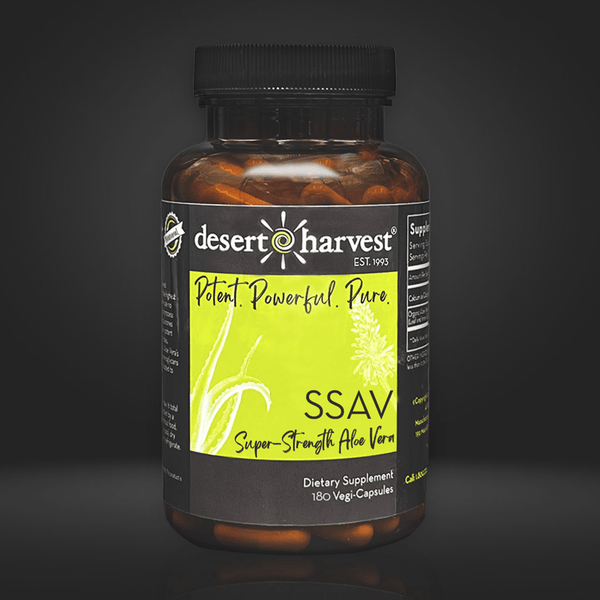
One option that meets each of these points is Desert Harvest Super-Strength Aloe Vera: a freeze-dried, anthraquinone-free, purified Aloe Vera food supplement, concentrated 200:1, naturally a source of Aloe Vera polysaccharides including acemannan, and distributed in the EU by Bivio Medical B.V. (Desert Harvest Europe). Many people with a sensitive bladder choose it as part of a simple, daily, bladder-friendly routine.

Good to know
Frequently asked questions
What are anthraquinones and aloin, and why are they removed from Aloe Vera?
Is Aloe Vera legal in food supplements in the EU?
What is freeze-dried Aloe Vera and why does processing matter?
Is Desert Harvest Aloe Vera available in Europe, the UK and the Netherlands?

Food supplement. Desert Harvest Super-Strength Aloe Vera is a food supplement and is not a substitute for a varied, balanced diet and a healthy lifestyle. It is not intended to diagnose, treat, cure or prevent any disease. If you are pregnant, breastfeeding, taking medication or under medical care, speak to your doctor or pharmacist before use. This article is general educational information about Aloe Vera and EU food law, and is not medical or legal advice.