In short: a good urinary tract supplement is one that is honest about its ingredients and the evidence behind them, gives transparent doses, uses a clean formulation, and slots calmly into your daily routine. In the EU it is a food, not a medicine, so it cannot lawfully claim to prevent, treat or cure anything. This guide explains what to look for, how the main ingredients compare, and the questions worth asking before you buy.
Searches for a urinary tract supplement have grown steadily across the UK and Europe, helped along by a wider conversation about using antibiotics more sparingly. The shelves are crowded and the marketing can be loud. What follows is a calm, evidence-aware way to read the category so you can choose something that genuinely suits you.
First, what a urinary tract supplement actually is
In the European Union, products sold for urinary tract or bladder wellbeing are regulated as food supplements, not medicines. That distinction matters more than it sounds. A medicine can be authorised to treat or prevent a named condition; a food supplement cannot. It is intended to support a normal, healthy routine alongside a balanced diet and sensible hydration, and the honest brands say so plainly.
This is also why you will not see a reputable EU supplement claim to "prevent" or "stop" a urinary tract infection. It is not permitted, and as the next section explains, the regulator has been consistent about it.
The legal reality every buyer should know

The European Food Safety Authority (EFSA) assesses health claims under Regulation (EC) No 1924/2006. To date it has not authorised a single urinary health claim for cranberry, D-mannose or any related ingredient. Every application submitted (for products such as Uroval, Pacran and CranMax) has been rejected for insufficient evidence. Heather (Calluna vulgaris) sits on the EU's "on hold" botanical list, so no approved function claim exists there either.
The practical takeaway: no food supplement, from any brand, can lawfully tell you it prevents or treats urinary infections in the EU. If a product does make that promise, that is a red flag about the seller rather than a sign of a superior formula. A trustworthy supplement competes on transparency and quality instead. You can read more about how we approach this in our pillar guide to urinary comfort and bladder wellbeing.
The main ingredients you will encounter
Three ingredients dominate the category. Here is what the research actually says, offered as neutral education rather than a promise about any particular product.
D-mannose
D-mannose is a simple sugar found naturally in some fruits. It is popular and widely studied, but the picture is mixed. The large UK MERIT trial (598 women, published in JAMA Internal Medicine, 2024) found that daily D-mannose did not meaningfully reduce repeat episodes compared with placebo (51.0% versus 55.7%) and concluded it should not be routinely recommended in primary care. A 2022 Cochrane review had already rated the existing evidence as low quality. None of this means D-mannose is "bad"; it means honest claims about it should stay modest.
Cranberry (proanthocyanidins, or PACs)
Cranberry's much-discussed compounds are proanthocyanidins (PACs). A 2023 Cochrane review of 50 trials and more than 8,000 people reported a roughly 26% reduction in repeat infections among women who are prone to them. That is a modest but real signal, and stronger than the D-mannose data. Products are often standardised to a PAC dose, with 36 mg frequently cited, so the amount of PAC matters far more than the headline milligrams of "cranberry".
Heather (Calluna vulgaris)
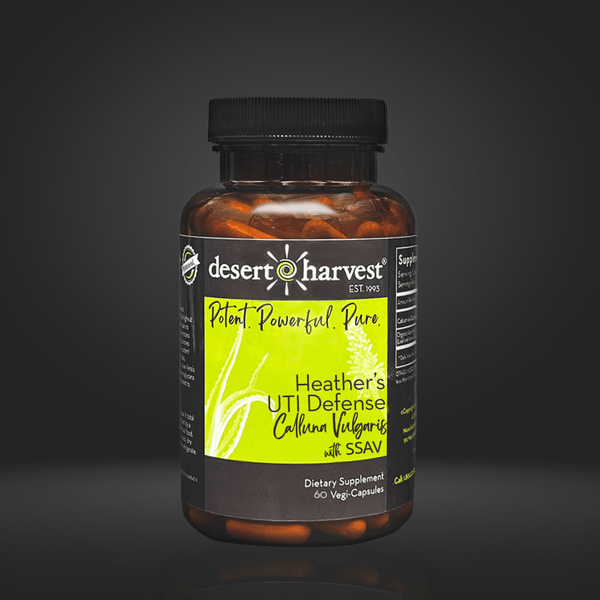
Heather, or Calluna vulgaris, is a native European botanical with a long history of traditional use across Europe. It is the ingredient behind Heather's UTI Defense, our food supplement option for those who prefer a European botanical as part of a daily routine. As with cranberry and D-mannose, there is no authorised EU claim for it, so we describe it honestly: a heritage plant offered as part of a daily routine for those mindful of urinary comfort, not as a remedy.
A practical checklist for choosing well

Whichever ingredient appeals to you, a well-made supplement tends to share these qualities:
- Honest framing. It talks about supporting comfort and a daily routine, not curing or preventing illness. Overclaiming is the clearest warning sign.
- Transparent dosing. The label states the exact amount of the active compound (for example, mg of PACs, not just "cranberry extract"), so you can compare like with like.
- A clean formulation. Minimal unnecessary fillers, bulking agents or sweeteners, and suitable for your needs if you are vegan, vegetarian or avoiding particular allergens.
- Clear sourcing and quality. A reputable brand will tell you where ingredients come from and how the product is tested for purity.
- Realistic expectations. Good companies set sensible timeframes and never imply a guaranteed outcome.
- Fits your routine. Capsules, powders and sachets all exist; the best format is the one you will actually take consistently.
- Market compliance. It should be lawfully sold in your country, labelled in your language and within national botanical rules.
A supplement is one part of a wider routine
No supplement works in isolation, and the most useful daily habit is also the least glamorous: staying well hydrated. Drinking enough fluid through the day supports normal urinary function for most people. Gentle, consistent habits, such as sensible hydration, not delaying a trip to the loo, and a balanced diet, form the foundation, with a supplement as an optional companion rather than a substitute. For a closer look at how the ingredients stack up, our article on D-mannose versus cranberry goes further.
A note on who these products are for
Urinary wellbeing is not only a women's topic, although demand does skew that way. Men can take urinary tract supplements too, and interest tends to rise with age across all genders. Many people also become more attentive to urinary comfort around and after the menopause, when changing oestrogen levels can affect the tissues of the urinary tract. None of this is cause for alarm, and a calm daily routine is usually a better starting point than a panic purchase.
Finally, a supplement is never a replacement for medical care. If you have symptoms that worry you, or recurring problems, please speak to a pharmacist or doctor.

Good to know
Frequently asked questions
Is D-mannose or cranberry better for the urinary tract?
How many milligrams of cranberry PACs do I need?
Can men take urinary tract supplements too?
Is it safe to take D-mannose or cranberry long term?

Heather's UTI Defense is a food supplement, not a medicine, and is not intended to diagnose, treat, cure or prevent any disease. Food supplements should not be used as a substitute for a varied, balanced diet and a healthy lifestyle. If you have symptoms or any health concern, please consult a pharmacist or doctor. The sources mentioned above (EFSA, Cochrane and JAMA Internal Medicine) are cited for education and do not constitute an endorsement of any product.