Recurrent UTIs are one of the most common — and most wearing — reasons people look for help with their urinary tract. If you have had two or more urinary tract infections in six months, or three or more within a year, you are far from alone, and you are not doing anything wrong. This guide explains, calmly and without overselling, why recurrent UTIs happen, which everyday habits may support your urinary tract, and how natural food supplements fit in under Europe’s strict rules, with an honest look at what the research shows.
What counts as a recurrent UTI?
A urinary tract infection (UTI) is an infection anywhere along the urinary tract, most often the bladder, where it is sometimes called cystitis. Infections are described as recurrent when someone has at least two within six months or three or more within twelve months — a definition used by the European Association of Urology (EAU). Recurrent UTIs affect women far more often than men, largely because the female urethra is shorter, giving bacteria a shorter route to the bladder.
Why do recurrent UTIs happen?

Most UTIs are caused by bacteria — commonly Escherichia coli (E. coli) — that live in the gut and can reach the urinary tract. Whether an infection takes hold depends on a mix of factors that often overlap in recurrent cases:
- Anatomy, and a shorter urethra.
- Sexual activity, which can move bacteria towards the urethra.
- Incomplete bladder emptying, which leaves urine where bacteria can multiply.
- Hormonal changes, particularly the fall in oestrogen around the menopause.
- Some forms of contraception, such as spermicides or a diaphragm.
- A family history of UTIs, suggesting an inherited tendency.
- Underlying conditions, such as diabetes, or anything that slows the flow of urine.
Researchers have also explored how some E. coli may persist within the bladder wall and re-emerge later, which could help explain why infections sometimes return even after antibiotics.
Why urinary problems can increase after the menopause
After the menopause, falling oestrogen levels change the tissues of the lower urinary tract and shift the balance of protective bacteria — a well-recognised reason many women notice more urinary discomfort, or more frequent infections, from their fifties onwards (charities such as Bladder Health UK explain this well). If it sounds like you, it is worth a calm conversation with your GP, as there are appropriate options, including local oestrogen, for this stage of life.
Everyday habits that may support your urinary tract
No single habit guarantees you will never get another UTI, but several gentle, sensible measures are widely recommended and may help you look after your urinary comfort day to day:
- Stay well hydrated, with steady fluids that keep your urine pale.
- Do not routinely hold on when you need to pass urine.
- Empty your bladder after sex.
- Wipe from front to back to reduce the spread of gut bacteria.
- Choose breathable cotton underwear and avoid harsh, perfumed washes.
- Keep an eye on any personal irritants.
Think of these as part of a bladder-friendly routine rather than a cure; they do not replace medical care when you need it.
Natural supplements: an honest look at the evidence

Many people explore food supplements as part of a daily bladder-friendly routine. It helps to know what the research actually shows, because this marketplace often promises more than the evidence supports.
D-mannose
D-mannose is a simple sugar that became popular for urinary support. The most rigorous test to date — the UK MERIT trial, published in JAMA Internal Medicine in 2024 — followed 598 women prone to recurrent UTIs and found 2 g daily was no more effective than a placebo (51.0% versus 55.7% had a further infection, not a statistically significant difference). An earlier 2022 Cochrane review had already rated the evidence as low quality. D-mannose is widely used and generally well tolerated, but the best current evidence does not show a clear benefit.
Cranberry and proanthocyanidins (PACs)
Cranberry is the other household name. Its proanthocyanidins (PACs) are the most-studied compounds, and laboratory research has explored how PACs may interfere with the ability of bacteria to stick to the urinary tract lining. The 2023 Cochrane review of cranberry products concluded that, in women with recurrent UTIs, cranberry probably reduced the risk of repeat infections by roughly a quarter — a modest but genuine signal, stronger than the D-mannose picture, though the underlying studies vary in quality.
Heather (Calluna vulgaris): the European botanical
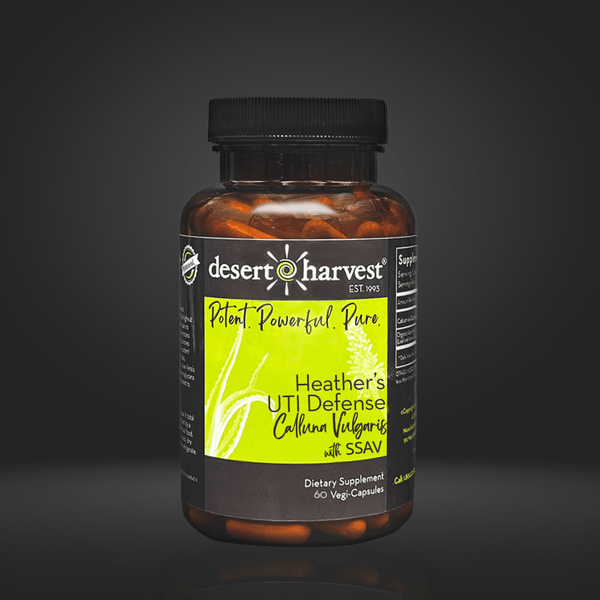
Less familiar to most shoppers is heather (Calluna vulgaris), a native European plant with a long heritage in European herbal tradition. Where cranberry is North American and D-mannose a laboratory-made sugar, heather is the European counterpart, and it is the botanical at the heart of Heather’s UTI Defense, a food supplement option for a bladder-friendly daily routine. As with the others, no health claim for heather has been authorised in the EU, so we describe it simply: a heritage botanical some people like to include in a daily routine. Our guide to urinary comfort and bladder wellbeing compares these ingredients in more detail.
Why no supplement may claim to ‘prevent’ UTIs in the EU
This is worth saying plainly, because honesty builds trust. Under Regulation (EC) No 1924/2006, the European Food Safety Authority (EFSA) has not authorised any urinary-health claim for cranberry, D-mannose or heather. So no food supplement — ours included — may legally claim to prevent, treat or reduce the risk of UTIs or cystitis. Any brand suggesting otherwise is overstepping the rules; we would rather tell you the truth, that supplements may be a thoughtful part of a daily routine but are food, not medicine.
When to see a doctor
Food supplements and good habits do not replace medical treatment, and they cannot stand in for antibiotics when an infection needs them. See your GP or pharmacist promptly if you notice burning when passing urine, going far more often than usual, cloudy or bloody urine, or lower-tummy discomfort — and seek urgent advice if you develop a fever, back or side pain, feel generally unwell, or are pregnant. Recurrent UTIs deserve a proper review to find any underlying cause. If the tests keep coming back clear while the symptoms return, our guide to cystitis that keeps coming back explains what that can mean.
Living with recurrent UTIs can be tiring, but understanding why they happen helps you feel more in control. Explore the rest of our urinary wellness series for more on hydration, cranberry alternatives and bladder care after the menopause.

Good to know
Frequently asked questions
Why do I keep getting UTIs?
Why do I get more urinary problems after the menopause?
Does drinking more water help your urinary tract?
Can men take urinary tract supplements too?

Food supplement notice. Heather’s UTI Defense is a food supplement, not a medicine, and is not intended to diagnose, treat, cure or prevent any disease. Food supplements should not be used as a substitute for a varied, balanced diet and a healthy lifestyle. Do not exceed the recommended daily intake. If you are pregnant, breastfeeding, taking medication or under medical care, consult your doctor or pharmacist before use. Keep out of the reach of young children.