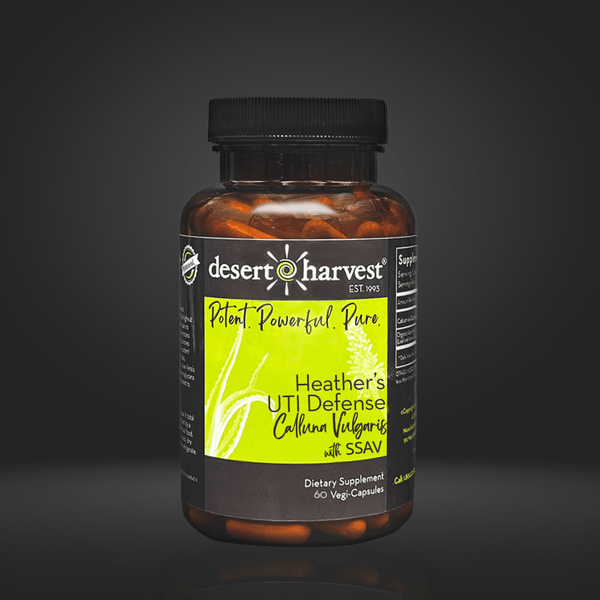
If you are looking for the best natural supplement for urinary health, the honest answer is that it depends on what you want from a daily routine, because no single ingredient is a guaranteed solution and, in the European Union, no food supplement is permitted to claim it prevents or treats infections. The three names you will meet most often are D-mannose, cranberry and heather (Calluna vulgaris). This calm, evidence-aware guide explains what each one is, what the research actually shows, and how to think about them as part of a bladder-friendly routine rather than as a cure.
Why honesty matters in this category
The urinary supplement aisle is full of confident promises, and many of them are not allowed under EU food law. Under Regulation (EC) No 1924/2006, the European Food Safety Authority (EFSA) has assessed and rejected every health claim submitted for cranberry and D-mannose in relation to urinary tract infections. That means no brand in the EU may legally state that its supplement prevents, stops or reduces the risk of a UTI. We think that is worth saying plainly, because choosing a supplement is easier when the marketing is not louder than the evidence.
Throughout this article we describe these ingredients as general education, drawing on published research and the work of organisations such as the European Association of Urology and Bladder Health UK as sources. None of this is medical advice.
D-mannose: the laboratory sugar

D-mannose is a simple sugar that occurs naturally in fruits such as cranberries and apples and is sold in powder or capsule form, usually around 2 g per daily serving. Researchers have studied whether D-mannose can influence how certain bacteria, particularly E. coli, attach to the lining of the urinary tract, which is why it became popular as a non-antibiotic option.
The evidence, however, has cooled. The large UK MERIT trial (published in JAMA Internal Medicine, 2024), which followed 598 women with recurrent urinary infections across 99 primary care centres, found no clear benefit for daily D-mannose over placebo: 51.0% of the D-mannose group and 55.7% of the placebo group went on to have a medically attended infection, a difference that was not statistically significant. An earlier 2022 Cochrane review had already rated the existing D-mannose evidence as low quality. D-mannose remains widely used and generally well tolerated, but the strongest recent trial did not support it.
Cranberry and its proanthocyanidins (PACs)
Cranberry is the most studied option, and the active compounds of interest are proanthocyanidins (PACs). Standardised products often aim for around 36 mg of PACs per day, which is the figure many educational sources cite when discussing cranberry research. Tablets and capsules are generally favoured over sweetened juice, because juice can be high in sugar and the PAC content is harder to standardise.
The most recent 2023 Cochrane review (50 studies, 8,857 participants) found that cranberry products probably reduced the risk of repeat symptomatic, culture-verified infections in women with recurrent UTIs by roughly a quarter (relative risk 0.74). That is a modest, real signal rather than a dramatic one, and it is the best evidence of the three ingredients here. As with D-mannose, EFSA has not authorised any EU health claim for cranberry, so the research belongs in educational content like this, not on a product label.
Heather (Calluna vulgaris): the European botanical

Heather, or Calluna vulgaris, is the wedge that most cranberry and D-mannose brands overlook. It is a native European plant with centuries of use in traditional herbalism, including a long heritage of being associated with the urinary system in European folk practice. Where D-mannose is a laboratory-purified sugar and cranberry is the well-trodden North American answer, heather is very much the European botanical, with a heritage story that the big single-ingredient brands simply do not tell.
Heather is the botanical at the heart of our heather food supplement, an option for people who want a natural daily companion for their urinary and bladder wellbeing routine. We offer it as a thoughtful part of a healthy lifestyle alongside good hydration, not as a treatment for any condition. You can read more about how the different options fit together on our pillar guide to urinary comfort and bladder wellbeing.
Heather, cranberry and D-mannose compared
| Ingredient | What it is | Typical daily form | Strength of research | Best thought of as |
|---|---|---|---|---|
| Heather (Calluna vulgaris) | Native European botanical with a long herbal heritage | Capsule or extract | Traditional use; limited modern trial data | A European daily wellbeing companion |
| Cranberry (PACs) | Fruit extract standardised for proanthocyanidins | Tablet/capsule (~36 mg PAC) | Strongest of the three (2023 Cochrane, modest effect) | The well-studied conventional option |
| D-mannose | Simple sugar found in some fruits | Powder/capsule (~2 g) | Weak; 2024 MERIT trial showed no clear benefit | Popular but not supported by the latest trial |
No authorised EU health claim exists for any of these ingredients in relation to urinary infection, so the table reflects research context and tradition, not promised outcomes.
So what is the best natural supplement for urinary health?
There is no universal winner. If you want the most-studied conventional choice, standardised cranberry has the strongest (though still modest) evidence base. If you are drawn to a European botanical heritage and want a natural, plant-based daily routine, heather may appeal. D-mannose remains popular and well tolerated, but the latest large trial did not show a clear benefit, so manage your expectations accordingly. The genuinely best choice is the one you will use consistently, that suits your budget and preferences, and that you have discussed with a healthcare professional if you experience recurrent symptoms.
Everyday habits that support urinary wellbeing
Whichever supplement you consider, the basics still matter and cost nothing. As part of a bladder-friendly routine, many people find it helpful to:
- Stay well hydrated with water across the day, so you pass urine regularly.
- Avoid holding on for long periods when you need to go.
- Pay attention to gentle, fragrance-free intimate hygiene.
- Notice your own patterns, and speak to a clinician if symptoms keep returning.
For more on the science and the wider picture, browse the other guides in our urinary wellness series.

Good to know
Frequently asked questions
Is D-mannose or cranberry better for the urinary tract?
How much D-mannose should I take per day?
What is heather (Calluna vulgaris) traditionally used for?
What can I take instead of cranberry for urinary health?

Our heather supplement is a food supplement and is not a substitute for a varied, balanced diet or a healthy lifestyle. Food supplements should not be used as a substitute for medical care. If you have ongoing or recurrent urinary symptoms, please speak to a doctor or pharmacist.