In short: The word "aloe" on the front of a bottle tells you very little. To judge an aloe gel, turn it over and read the ingredients list, where aloe should appear near the top, look for a stated aloe percentage if the brand is transparent about it, check whether the aloe has been purified so its naturally occurring anthraquinones (aloin) have been removed, and see what else is in there, including fragrance, colour and alcohol. A short, honest label usually beats a long, vague one. Here is how to decode it.
Aloe gels vary enormously, from a lightly aloe-scented water with a long list of additives to a genuinely aloe-led formula. The marketing on the front rarely reveals which is which. The real story is on the back, in the ingredients list, and once you know what to look for it takes only a few seconds to read.
Start with the ingredients order

By law, cosmetic ingredients are listed in order of quantity, from most to least, using their standardised INCI names. So the position of aloe in the list matters. Aloe appears as Aloe Barbadensis Leaf Juice, Aloe Barbadensis Leaf Juice Powder or similar. If aloe sits near the very top, it makes up a large share of the formula. If it appears far down, below several other ingredients, there may be very little of it, however green the bottle looks.
One nuance worth knowing: many aloe gels list water (aqua) as the first ingredient, because the gel has been made by reconstituting aloe powder with water. That is not a red flag in itself. What matters is whether aloe is clearly present high in the list rather than as a token splash near the bottom.
Look for a stated percentage
Transparent brands often state an aloe percentage, such as a high-percentage aloe gel, and explain whether it refers to aloe juice or powder. A stated figure is a good sign because it shows the brand is willing to be specific. Be a little cautious with very round marketing numbers that are not reflected anywhere in the ingredients list. If a label claims to be almost entirely aloe but the list is full of other things near the top, the two do not add up.
If you want this to feel less abstract, our guide to aloe vera for sensitive skin explains why a high, clearly stated aloe content and a short list tend to suit reactive skin best.
Check how the aloe has been purified
This is the part most front-of-bottle marketing skips over, and it matters more than the colour or the scent. All aloe vera naturally contains anthraquinones, chiefly aloin, in the bitter yellow latex that sits just under the leaf skin. These compounds are not what you want in a skincare gel. The thing to look for, then, is not "inner versus whole" wording but whether the aloe has been properly purified so that the anthraquinones have been taken out.
Helpful words to look for on a label or product page include anthraquinone-free, aloin-free, purified or decolourised. A well-made gel may also be freeze-dried and concentrated (you will sometimes see a figure such as 200:1), which preserves the soothing, acemannan-rich part of the plant while leaving the aloin behind. A brand that explains this is telling you it has thought about what ends up in the bottle, rather than simply pressing a leaf and calling it natural.
Check what else is in there

Aloe is only part of the picture. Scan the rest of the list for a few things that matter, especially for sensitive skin:
- Fragrance / Parfum. A common trigger for reactive skin. Fragrance-free formulas leave it out entirely.
- Colour. A green tint is added; purified aloe gel is naturally clear to pale. Colourants are cosmetic, not a sign of quality.
- Alcohol. Some gels use drying alcohols high in the list, which can feel harsh on dry skin. Fatty alcohols such as cetyl alcohol are different and act as emollients.
- Preservatives. A water-based gel needs a preservative system to stay safe; this is normal and a good thing.
- Soothing and hydrating extras such as glycerin or panthenol, which can be welcome additions.
A quick label checklist
| What to check | Good sign | Worth a second look |
|---|---|---|
| Aloe position in the list | Near the top | Far down, below many additives |
| Stated aloe percentage | Clearly given and consistent with the list | Big claim, vague list |
| Aloe purified of anthraquinones | Described as anthraquinone-free, aloin-free, purified or decolourised | No mention of how the aloin was removed |
| Fragrance | Fragrance-free | Parfum high in the list, for sensitive skin |
| Colour | Naturally clear to pale | Bright green from added colour |
| List length | Short and readable | Very long with several triggers |
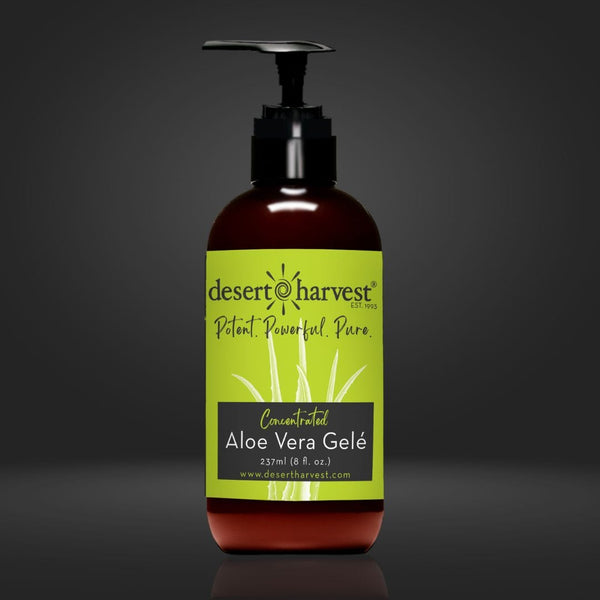
This is exactly the thinking behind our Aloe Vera Gelé by Desert Harvest: an aloe-first, fragrance-free formula whose purified, decolourised aloe has had its naturally occurring anthraquinones removed, with a short, honest ingredients list. Desert Harvest is made in the United States, and Bivio Medical distributes it across Europe. You can see how transparency runs through the whole range on our sensitive skin and aloe hub.
A note on storage and freshness
Two small symbols are worth knowing. The open-jar symbol with a number and an M (for example 12M) is the period after opening, telling you how many months to use the product once opened. A best-before date may also appear for products with a shorter life. Keeping a gel cool and closed helps it stay fresh and pleasant to use.
The takeaway
You do not need to be a chemist to choose a good aloe gel. Turn the bottle over, check that aloe sits high in the list, look for a clearly stated percentage, see whether the aloe has been purified so its naturally occurring anthraquinones are removed, and scan for fragrance, colour and harsh alcohols, especially if your skin is sensitive. A short, transparent label is almost always a better sign than a glossy front and a vague back.

Good to know
Frequently asked questions
What percentage of aloe vera should a good gel have?
Why is my aloe vera gel green?
What does anthraquinone-free or aloin-free aloe mean?
How can I tell if an aloe gel is fragrance-free?
What does the open-jar symbol with a number mean?

For external use only. Patch test before first use. This is general cosmetic and label-literacy information, not medical advice; our aloe products are cosmetics, not medicines. If you have a persistent skin concern, please speak to your doctor or pharmacist.