You may have met the name on a food list, in a forum thread or in a diet guide for a sensitive bladder, and wondered what it actually is. This page explains the ingredient in plain words: what it is, what it does, and what it is not.
In short: calcium glycerophosphate is a mild, food-grade mineral salt of calcium and glycerophosphate. People use it as a pre-meal buffer, taken just before acidic food or drink. It is not a medicine and it does not treat any condition.
What calcium glycerophosphate is
It is a gentle, mildly alkaline mineral salt, made of calcium and glycerophosphate. It is food-grade, and it does not change the taste of what you eat or drink.
So what is it used for? The answer is short. People take it shortly before something acidic, such as coffee, a tomato sauce, citrus or a glass of wine, as a way of taking the acid edge off the meal.
 Related productCalcium Glycerophosphate – Food-Acid Buffer with Aloe Vera4.93· 27 reviews497,00 Kč
View product
What it does, in plain words
A buffer is a substance that resists a change in acidity. When calcium glycerophosphate mixes with acidic food or drink, it releases calcium and glycerophosphate. The glycerophosphate soaks up some of the free acid, the part that makes coffee, citrus and tomatoes taste sharp. The mixture moves a little away from the acidic end, closer to neutral, so the acid content of what you eat or drink may be reduced.

Timing matters, because the buffer has to be there while the acidic food is. That is why it is taken just before the meal or drink, or at the start of it, not afterwards. If you would like the chemistry step by step, we explain it in how calcium glycerophosphate buffers food acid.
Why people with a sensitive bladder know the name
If you live with interstitial cystitis or bladder pain syndrome (IC/BPS), or a bladder that complains after certain meals, you will probably have read about acidic food and drink. Coffee, citrus, tomatoes, wine and fizzy drinks are the items people most often report. Triggers differ from person to person, so most diet guidance suggests a food and symptom diary rather than a long banned list. Our food pH chart for sensitive bladders shows which everyday foods sit at the more acidic end.
Calcium glycerophosphate is named on the food list kept by the IC Network, and it appears within the dietary guidance shared by the Interstitial Cystitis Association. That is how many people first meet it. Our guide to food acid and the bladder sets out the wider picture of diet and comfort.
In the United States, many people used it in a product called Prelief. It is hard to buy in Europe, which is why people here search for the ingredient by name. We explain this in looking for Prelief in Europe. The ingredient is the same. We make no claim that the products are identical.
What it is not
It is not a medicine, and it is not a treatment for any condition, including IC/BPS or cystitis. Nor is it meant to change your body's overall pH: it works on the food and drink you take it with. It is a dietary tool that may reduce the acid content of a particular meal or drink, and it sits alongside your own food diary and your care team, not in place of them.

You may also see bold percentage figures attached to acid reducers elsewhere. We do not quote one. How much a buffer changes a meal depends on what you eat, how much of it, and how acidic it was to begin with. A single headline number could not apply to every plate.
And it is no reason to wait with symptoms that worry you. If you have pain that lasts or gets worse, a fever, blood in your urine, or pain in your back or side, please see your GP. Any medicine you have been prescribed stays as your doctor advised; ask your pharmacist before you add a supplement alongside it.
How it is taken, and who should ask first
Follow the directions on the label of the product you use. The routine itself is simple: it is taken just before the acidic food or drink, and you do not go over the recommended daily dose.
Before you use any food supplement, speak to a pharmacist or your GP first if you are pregnant, breastfeeding, taking medication, or living with a medical condition, including kidney problems. A food supplement is also never a substitute for a varied, balanced diet.
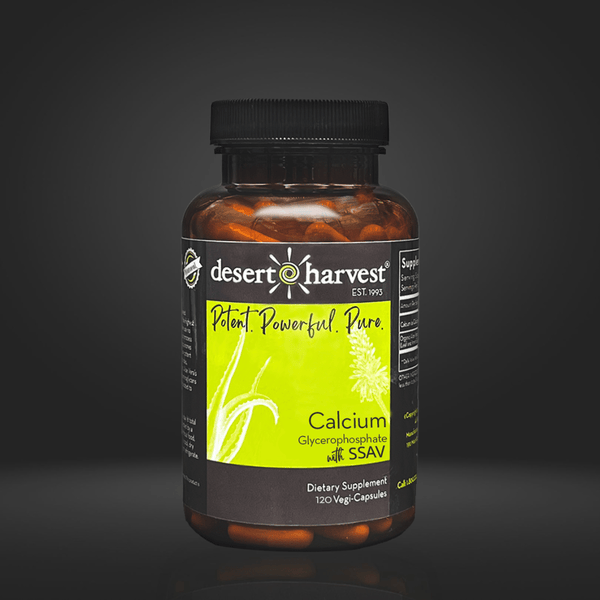
Our own product is CalGly, Desert Harvest Europe's calcium glycerophosphate food supplement. It comes as 120 vegan capsules, each with 230 mg of calcium glycerophosphate (44 mg of calcium) and 40 mg of organic, anthraquinone-free Aloe Vera, taken as one capsule just before acidic food or drink.
Good to know