If you have ever searched "do UTI supplements work", you have probably noticed something odd: the products themselves rarely give you a straight answer. In the EU there is a good reason for that caution. Food supplements are legally food, not medicine, and EU law does not permit a food supplement to say it prevents, treats or reduces the risk of a urinary tract infection. This article explains why that rule exists, what the research actually shows, and how to read supplement labels honestly.
The short answer
No food supplement sold in the EU may legally claim to "prevent UTIs", "stop cystitis" or act as a "natural antibiotic". That is not a sign a product is useless, and it is not a marketing trick. It reflects Regulation (EC) No 1924/2006, the EU framework on nutrition and health claims, under which only authorised claims may appear on food. To date, the European Food Safety Authority (EFSA) has not authorised a single urinary-infection claim for cranberry, D-mannose or any related ingredient. So when a brand promises to "prevent" infections, it is either operating outside the rules or selling a different category of product altogether.
Why "prevent UTIs" is off-limits for food supplements

The logic is straightforward once you see the categories. Anything that claims to prevent, treat or cure a named disease is, by definition, making a medicinal claim. In the EU those claims are reserved for licensed medicines and certain registered medical devices, which go through a separate approval route. A UTI (urinary tract infection) is a disease, so attaching it to a food supplement as something the product acts upon is not permitted.
This is why you will sometimes see a German pharmacy product that can talk about preventing recurrent infections, sitting on the shelf next to a supplement that cannot. The difference is usually that the first is a registered medical device (Klosterfrau's Femannose N is a well-known example), not a food supplement. Same aisle, different legal category, different rules. It is worth knowing this distinction so a bolder label does not read as a better product.
So, do UTI supplements work?
This is where honesty matters more than hype. The most-studied ingredients are cranberry and D-mannose, and the recent evidence is genuinely mixed:
- Cranberry: the 2023 Cochrane review of cranberry products reported a modest reduction in the recurrence of symptomatic, confirmed UTIs in certain groups of women with recurrent infections. Modest, real in some studies, but far from a guarantee.
- D-mannose: the large UK MERIT trial (published in JAMA Internal Medicine in April 2024) followed 598 women across 99 primary care practices and found no clear benefit over placebo for daily D-mannose. An earlier 2022 Cochrane assessment had already rated the existing D-mannose evidence as poor quality.
In other words, the science does not support sweeping promises for any single ingredient. The category is best understood as offering everyday urinary and bladder support as part of a wider routine — not a cure, and not a substitute for medical care. A brand that tells you this plainly is generally a brand worth trusting.
What a compliant label is really saying

Once you understand the rules, EU supplement labels become easier to read. Phrases such as "supports your everyday urinary and bladder wellbeing routine", "for daily urinary tract maintenance" or "a natural daily companion alongside good hydration" are the compliant, careful way of describing a food supplement's place in your day. They are deliberately about maintenance and comfort, not about acting on an infection.
Conversely, treat the loud language as a warning sign. Words like "kills bacteria", "urinary antiseptic", "flushes out infection" or "natural alternative to antibiotics" are not permitted on a food supplement in the EU. A product leaning on them is overclaiming, and overclaiming is rarely a marker of quality. You can read more about how we think about this throughout our guide to urinary comfort and bladder wellbeing.
How to choose calmly
If you are comparing options for everyday urinary tract maintenance, a few practical questions help more than any marketing line:
- Does the label respect the law? Honest, maintenance-focused wording suggests a brand that respects both the rules and you.
- Is the composition clear? Look for the ingredient, the amount per daily serving and the source. Transparency beats buzzwords.
- Does it fit a routine you can keep? A daily habit you actually maintain — alongside sensible hydration — matters more than any single capsule.
- Is medical advice still front and centre? A responsible brand will always point you to a healthcare professional for symptoms, recurrent problems or anything that worries you.
Where heather fits in
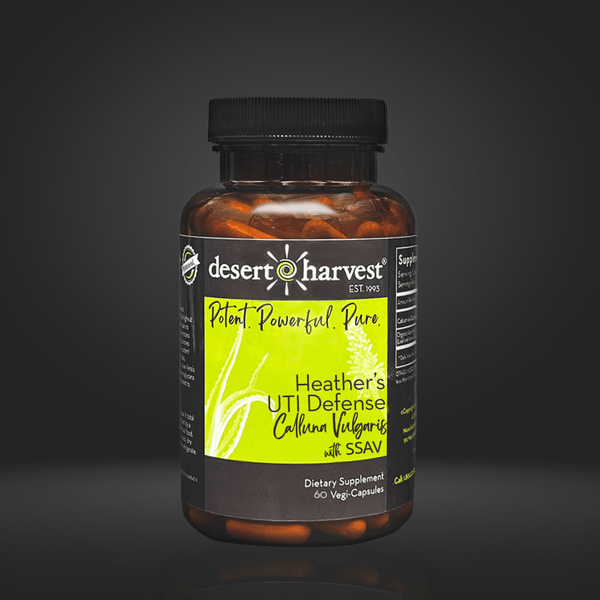
Most of the urinary supplement conversation in Europe is dominated by American cranberry and laboratory-made D-mannose. There is, however, a long-overlooked European option: heather (Calluna vulgaris), a native botanical with centuries of heritage in European herbal tradition. We offer it as a food supplement, Heather's UTI Defense, framed exactly as the rules require — as part of an everyday urinary comfort and bladder wellbeing routine, not as something that prevents or treats infection.
If you would like to weigh heather against the more familiar ingredients, the comparisons and life-stage guides in our urinary wellness blog are written to inform rather than to sell — telling you the truth the overclaiming marketplace often will not.
The takeaway
"Prevent UTIs" is a claim no EU food supplement can lawfully make, because such products are food, not medicine, and EFSA has authorised no urinary-infection claim for these ingredients. The evidence for the headline ingredients is modest and mixed. None of that means urinary supplements have no place — only that their honest role is everyday support and maintenance, never a substitute for medical care. Read labels for what they say, be wary of products that promise the most, and treat a brand's restraint as respect rather than a shortcoming.

Good to know
Frequently asked questions
Does D-mannose actually work for UTIs?
Can supplements replace antibiotics for a UTI?
Is it safe to take D-mannose or cranberry long term?
What is heather (Calluna vulgaris) traditionally used for?

Food supplement notice: Heather's UTI Defense is a food supplement, not a medicine, and is not intended to prevent, treat or cure any disease, including urinary tract infections. A food supplement should not be used as a substitute for a varied, balanced diet and a healthy lifestyle. Do not exceed the recommended daily intake. Keep out of the reach of young children. If you have symptoms, are pregnant or breastfeeding, take medication or have a medical condition, please consult a doctor or pharmacist. Educational sources such as EFSA, the European Association of Urology and patient charities are cited for context and information only, and do not imply endorsement of any product.