In short: D-mannose and cranberry are the two best-known natural ingredients people reach for when they are thinking about their urinary tract. Cranberry has slightly more supportive trial evidence behind it, D-mannose has had a more mixed run in recent research, and — importantly under EU rules — no food supplement containing either ingredient is allowed to claim it prevents or treats infections. This calm, evidence-aware comparison walks through what each ingredient actually is, what the research says, and how to think about them as part of an everyday urinary wellbeing routine.
If you have ever weighed a cranberry tablet against a tub of D-mannose powder, you are in good company. Both have a long association with the urinary tract and both are surrounded by marketing noise. Our aim is to cut through it with neutral, third-person education — and to be honest about where the evidence is strong, where it is thin, and what European law actually permits a supplement to say.
The two ingredients, briefly
Cranberry (and the PACs inside it)
Cranberry comes from the berries of Vaccinium macrocarpon, the American cranberry. The components researchers find most interesting are proanthocyanidins, usually shortened to PACs — specifically the A-type PACs. Much of the laboratory interest in cranberry has explored how these compounds interact with E. coli, the bacterium most often associated with urinary tract infections. You will often see cranberry products standardised to a measured PAC content (36 mg is a commonly cited figure in the research literature), because the amount of active compound varies enormously between a glass of sweetened juice and a concentrated capsule.
D-mannose
D-mannose is a simple sugar that occurs naturally in fruits such as cranberries, apples and peaches. It is related to glucose but handled differently — most of it is filtered by the kidneys and passes into the urine rather than being used for energy, which is why it became a popular subject of urinary-tract research. It is typically sold as a powder or capsule, with daily amounts in studies often around 2 grams.
What the research actually says

This is where a calm, honest read matters most, because the headlines have shifted in the last couple of years.
- Cranberry. The most thorough overview is the 2023 Cochrane review of cranberry products, which pooled dozens of trials. It concluded that cranberry products were associated with a modest reduction — in the region of a quarter — in the rate of repeat urinary tract infections among women with recurrent episodes, and in some other groups, while noting the evidence was stronger for some populations than others.
- D-mannose. Enthusiasm here has cooled. An earlier 2022 Cochrane review described the available D-mannose evidence as low or very low quality. Then in 2024 the large UK MERIT trial, published in JAMA Internal Medicine, followed 598 women across 99 primary-care centres taking either 2 g of D-mannose daily or a placebo for six months. The proportion who went on to have a further infection was 51.0% with D-mannose versus 55.7% with placebo — a difference that was not statistically significant. The authors concluded D-mannose did not offer a clear benefit over placebo for this purpose.
None of this means either ingredient is worthless; it means the picture is genuinely mixed and that individual responses vary. A sensible reading is that cranberry currently has the edge in trial support, while D-mannose remains popular but less well-substantiated.
A neutral side-by-side
| Consideration | Cranberry (PACs) | D-mannose |
|---|---|---|
| What it is | Berry extract rich in A-type proanthocyanidins | A naturally occurring simple sugar |
| Typical form | Capsules/tablets standardised to PAC content; juice | Powder or capsules, often around 2 g/day in studies |
| Recent evidence | 2023 Cochrane: modest reduction in recurrence for some groups | 2024 MERIT trial: no clear benefit over placebo |
| EU health claim status | No authorised urinary health claim | No authorised urinary health claim |
| General tolerability | Usually well tolerated; can interact with some medicines | Usually well tolerated as a food sugar |
The honest part: what EU rules allow a supplement to say

Here is something many shoppers do not realise. Under EU Regulation (EC) No 1924/2006, a food supplement may only make a health claim that has been formally authorised. To date, the European Food Safety Authority (EFSA) has not authorised any urinary health claim for cranberry, D-mannose or heather; several cranberry and D-mannose claims submitted over the years were not accepted.
The practical consequence is simple: no food supplement sold in the EU may legally claim to prevent, treat or reduce the risk of urinary tract infections or cystitis. If you see such wording on a marketplace listing, it is a claim the seller is not permitted to make. We prefer to talk about these ingredients as part of a daily urinary comfort and bladder wellbeing routine — never as a cure — and to let the research speak for itself.
A European botanical worth knowing about: heather
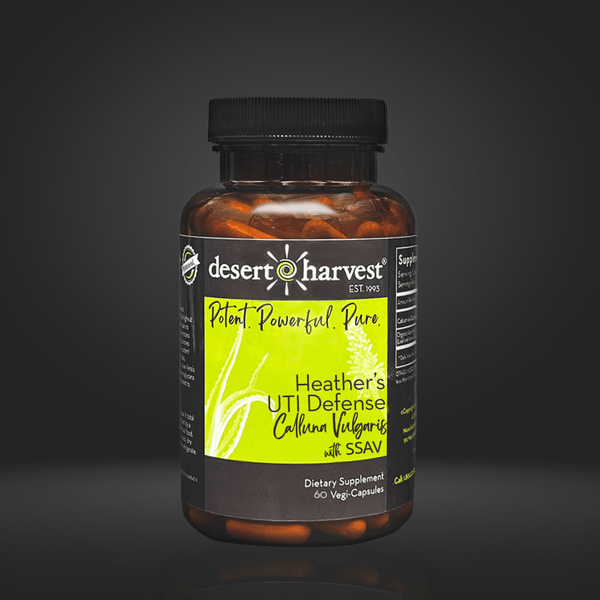
The cranberry-versus-D-mannose debate is framed almost entirely around two North American or laboratory-derived ingredients. A botanical with deep European roots rarely gets a mention: heather (Calluna vulgaris), a native moorland plant with a long heritage in European herbal tradition. It is the ingredient behind our own heather food supplement, which we offer simply as a food-supplement option for people building a daily urinary comfort and bladder wellbeing routine — never as a treatment, and with no claim to prevent, treat or reduce the risk of any infection or disease.
So how should you choose?
There is no single right answer, and your own circumstances matter more than any league table. A few calm pointers:
- Start with the basics. Good hydration, sensible habits and a balanced diet are the foundation, and no supplement replaces them.
- Match the ingredient to the evidence you find convincing. If you want the most trial support, cranberry currently leads; if you prefer a sugar-based approach, D-mannose remains widely used despite its mixed results.
- Look at composition, not slogans. Check the actual quantity of the active component — PAC content for cranberry, grams of D-mannose — rather than front-of-pack language.
- Talk to a professional. If you experience frequent urinary symptoms or anything that worries you, speak to your GP or pharmacist. Recurrent infections deserve proper medical attention, not just a supplement.
For the wider context — including hydration, life-stage changes and how natural ingredients fit together — see our pillar guide to urinary comfort and bladder wellbeing, and the other articles in our urinary wellness blog.

Good to know
Frequently asked questions
Does D-mannose actually work for UTIs?
Is D-mannose or cranberry better for the urinary tract?
Are cranberry tablets as good as cranberry juice?
Is it safe to take D-mannose or cranberry long term?

Food supplements are not a substitute for a varied, balanced diet and a healthy lifestyle. The information above is general educational content about ingredients and is not medical advice, and our products are food supplements, not medicines intended to diagnose, treat, cure or prevent any disease. If you have recurrent urinary symptoms or any health concern, please consult your doctor or pharmacist.