The short answer is yes: men can take urinary tract supplements. The cranberry, D-mannose and botanical products sold for everyday urinary and bladder wellbeing are foods, not gender-specific medicines, and nothing in their composition makes them unsuitable for men. That said, the male urinary tract behaves a little differently from the female one, most of the published research has been carried out in women, and a few urinary symptoms in men are a reason to speak to a doctor rather than reach for a supplement.
Are urinary supplements only for women?
Most marketing for a urinary supplement for men is aimed at women — not because the ingredients are unsuitable for men, but because women experience urinary tract infections far more often. A woman’s urethra is shorter than a man’s, which gives bacteria a shorter route to the bladder, and around half of women will have at least one UTI in their lifetime. In men under 50, by contrast, true UTIs are uncommon — on the order of a few cases per 10,000 men each year, according to clinical reviews. The ingredients are not sex-specific: cranberry, D-mannose and heather are food components that both men and women can consume.
Why the male urinary tract is a little different

Two things shape urinary wellbeing in men. The first is anatomy: the longer male urethra is one reason infections are less frequent. The second is the prostate.
The prostate sits just below the bladder and surrounds the urethra. From around the age of 50 it commonly enlarges — a non-cancerous change doctors call benign prostatic hyperplasia (BPH). Clinical sources, including the European Association of Urology, note that lower urinary tract symptoms linked to the prostate become steadily more common with age, affecting a majority of men in their sixties and the large majority of men over seventy. Prostate-related symptoms such as a weaker stream, going more often, getting up at night or a feeling of not emptying fully are a matter for a GP or urologist to assess, not something a food supplement is intended to address.
What is actually inside a urinary tract supplement?
Three ingredients dominate the category.
Cranberry (proanthocyanidins, or PACs)
Cranberry is the best-known urinary ingredient. Its characteristic compounds are proanthocyanidins, usually shortened to PACs. Researchers have studied how PACs interact with the urinary tract; a 2023 Cochrane review found that cranberry products may help reduce recurrent UTIs in some groups, such as women with repeated infections, while reporting little benefit in others. Most of that research was in women, so its relevance to men is less clear.
D-mannose
D-mannose is a simple sugar found naturally in some fruits. The evidence around it has softened recently: a large 2024 UK trial (the MERIT study, around 598 women) found no clear benefit over placebo for reducing recurrence, and a 2022 Cochrane review rated the overall evidence as poor quality. Again, these studies were carried out in women rather than men.
Heather (Calluna vulgaris)
Heather, or Calluna vulgaris, is a native European botanical with a long heritage in traditional herbalism connected to the urinary system. It is the ingredient in our own food supplement, and unlike cranberry and D-mannose it is a distinctly European choice rather than an American berry or a lab-derived sugar. As a botanical, heather sits within ongoing EU assessment, so we describe it in terms of its heritage and composition rather than attributing any specific effect to it.
What the evidence says — and doesn’t — for men

Two honest points matter here. First, most urinary supplement research has been done in women, so dedicated evidence in men is thinner still. Second, the European Food Safety Authority (EFSA) has not authorised any health claim for cranberry, D-mannose or heather in relation to urinary infections — every application submitted has been rejected. That means neither we nor any other brand can legally claim these ingredients prevent, treat or reduce the risk of UTIs in the EU.
None of that means men cannot take them. It means they are best understood as part of a daily routine for general urinary and bladder wellbeing, rather than as a remedy for a specific problem. For a fuller comparison of the three, our pillar guide to urinary comfort and bladder wellbeing sets them side by side.
When a man should see a doctor first
Because UTIs are less common and more likely to signal an underlying cause in men, a supplement is never a substitute for medical assessment. Speak to a GP or pharmacist if you notice:
- blood in the urine, or cloudy, strong-smelling urine;
- pain or burning when passing urine;
- fever, chills or pain in the lower back or sides;
- a sudden change in your stream, or difficulty emptying the bladder;
- needing to go much more often, or repeatedly getting up at night;
- any pain in the lower abdomen, groin or testicles.
These deserve a clinician’s assessment, particularly in men over 50 where the prostate is a common factor.
Choosing a urinary supplement as a man: a calm checklist
If your symptoms are settled and you want to support a daily routine, a few pointers help:
- Read the actual dose, not the front of the pack. Look at how much cranberry PAC or how many milligrams of the active ingredient a serving provides.
- Decide between single-ingredient and blends. Single-ingredient products make it clear what you are taking; blends can be convenient but harder to interpret.
- Keep expectations grounded. Given the mixed evidence, treat any product as one calm part of a wider routine, not a quick fix.
- Check for interactions. High cranberry intake can interact with blood-thinning medication such as warfarin, so ask a pharmacist if you take prescription medicines.
Where heather fits into a daily routine
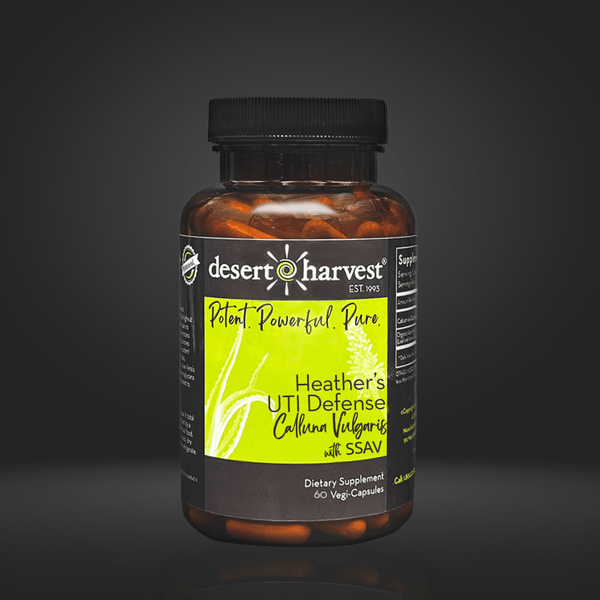
Heather’s UTI Defense is a heather-based food supplement that some people include as part of a daily urinary and bladder wellbeing routine. It is a food rather than a medicine, and it is suitable for men and women alike. We position it on its European botanical heritage and its composition, not as something that acts on any condition. You can also browse the rest of our urinary wellness articles for ingredient deep-dives and honest evidence summaries.

Good to know
Frequently asked questions
Can men take urinary tract supplements too?
Does drinking more water help your urinary tract?
Is it safe to take D-mannose or cranberry long term?
What is heather (Calluna vulgaris) traditionally used for?

Food supplement notice: Heather’s UTI Defense is a food supplement, not a medicine, and is not intended to diagnose, treat, cure or prevent any disease, including urinary tract infections. Food supplements should not be used as a substitute for a varied, balanced diet and a healthy lifestyle. If you have urinary symptoms, are pregnant or breastfeeding, or take prescription medication, speak to a doctor or pharmacist. This article is general educational information and is not medical advice.